Home Energy

Sunday, 25 January 2015

Home Energy Efficiency Tips: The Bathroom

When it comes to saving home energy, energy saving exteriors are the first link in the chain Including energy saving windows, doors and skylights in your plans to save home energy will make a big difference Windows that are double and triple paned provide insulation from the iciness of the wintertime and the heat throughout summer months. Poorly fitted and drafty entry doorways do nothing for your energy saving exteriors

Efficient storm doors that offer a quality barrier to the conditions are essential. Environment agencies now have standards such as the Energy Star Rating for exteriors windows and doors

A relatively new entrant in the struggle to save home energy is the idea of reflective roofing materials which supply another technique of creating a super energy saving exterior

Lowering roof temperatures by up to 100, this material cuts down on the amount of heat that is absorbed by your home Ask your builder to use a reflective roofing calculator and enclose an estimation of the energy saving you will make in his pro-forma

These materials are also given an Energy Star rating. Reflective roofing is most beneficial on houses in warm sunny climates and that are not already well shaded.


Source: http://www.youtube.com/watch?v=cVbpuh6K4Bw

Sunday, 18 January 2015

Save Home Energy Information - What to Do to Save Energy

The effect of the constant increase in electricity bills leads people to find ways to save energy. For some, turning the lights off before sleeping is one way of minimizing electric consumption. While there are also some who minimize their use of electrical appliances in order to reduce their energy consumption. These methods are also good, but, they are not really that effective or do not really maximize energy saving. There are many ways to save energy and minimize your electricity bills even without having to sacrifice comfort. To give you a better idea, here's a few save home energy information that you might want to consider.

Although turning off the lights can save you energy, it doesn't stop the lights from consuming energy as well as it also leads to you living in a dark place. This problem can be solved by changing all incandescent bulbs and using compact fluorescent lamp (CFL) bulbs instead. Aside from being energy efficient, CFL bulbs also produce brighter light as compared with what incandescent bulbs can produce. Doing this method can help you save energy without having to sacrifice comfort. The minimal use of electrical appliances and turning them off after using is also a good idea. But, to maximize your energy saving process, unplug them after turning them off because they still continue to consume energy when left unplugged. Also, try to buy energy efficient appliances. There many of these appliances these days that is being manufactured and sold in the market. They may be quite expensive, but in the long run, they can really help you save a lot of energy as well as lessen your electricity expenses.
Water leaks and water consumption are also one of the things that you can learn when reading about save home energy information. As you know, water and energy are related to each other. One of the largest sources of energy around the world comes from hydro power plants. This means that if there is a shortage in water, there may also be a shortage in energy. With this theory, there's a need for us to also conserve water in order to save energy. This is one of the most common things being overlooked by people when it comes to saving energy. Often, they would think that saving energy is just all about saving electricity consumption. This situation only shows the lack of knowledge when it comes to save home energy information.
With thorough research, you can surely find a lot of save home energy information that you can apply in order to save energy and lessen your electric expenses. What were mentioned previously are just a few save home energy information that you might want to keep in mind and try to apply. To learn more about save home energy information, try searching the internet. For sure, you will be able to find a lot out there.

Article Source: http://EzineArticles.com/4432475

Sunday, 11 January 2015

Why Your Home Needs a Home Energy Audit

This heating season, you probably want to save money on your energy use. This is especially true during this winter's cold snap that has affected much of the country as far south as Miami and Houston. But that might not be the only reason. You might find that your home's HVAC system is always running hard but can't adequately heat your home. Or some rooms in your house seem cooler or hotter than others. Maybe you noticed a mold or mildew problem in a room other than your bathroom. Perhaps your water heater can't keep up with demand. You can fix these problems by starting with a home energy audit.

How does a home energy audit work?

An energy audit looks at several specific features of your home. First, it lists the characteristics of your home's thermal envelope: walls, ceilings, floors, doors, windows, and skylights. Each of these features has a specific R-value, which is a measurement of the resistance to heat flow. The higher the resistance (or R-value), the better the insulative quality. Another factor is the leakage rate or how much outside air infiltrates into your home. Drafty doors and windows are the primary culprits here, however, other features of your home's construction, age, orientation to the sun, and physical condition will have an effect. A third area to look at is your home's mechanical system - the heating/ventilation/air conditioning (HVAC) as well as the heating water.

Energy Star provides a Home Energy Yardstick website so you can compare your household's energy use to the rest of the country. The site is a good place to start and gives some basic recommendations about making home energy efficiency improvements.

Generally, performing your own energy audit will help you discover most of the major energy usage problems in your house. For example, locating and sealing air leaks will help you save money and make your home more comfortable. An easy way is to wet your hand and then feel for drafts around:

* Electrical outlets
* Switch plates
* Window frames
* Baseboards
* Weather stripping around doors
* Fireplace dampers
* Attic hatches
* Wall or window-mounted air conditioners.

Look and feel for gaps where pipes and wires enter a wall. Also check where your floor meets the foundation. And don't forget mail slots. Check to see if caulking and weather stripping are applied properly and in good condition.

Every house and lifestyle, is different. It's safe to say that climate and location are primary factors in how your home performs. The other major factor is how you use energy in your home. When combined with information about local weather, the home's thermostat settings, as well as energy bills for a 12 month period (24 is more accurate), an energy audit can render a more accurate picture of how your home uses energy.

Unless you already have a few years experience of belly-crawling the dusty, cramped spaces of your home to weather-seal it, you should consider having a professional visit and perform an energy audit. Now you might think all an energy auditor does is seal a fan onto your front door and then prowl your house looking for drafts. Sure, they might perform this test, but not only do you get the benefit of their years of training and experience, you also gain from a fresh perspective.

Professionals can often see things you have overlooked that can help you save on your energy costs and be more energy efficient. For example, a slight discoloration along a corner of your living room wall might indicate an unsealed gap in your home's framing that lets in cold air and moisture. This and other hidden heat loss can also be detected with heat-sensitive cameras, a tool most homeowners don't own.

A qualified energy auditor can also give you an informed choice of options. Some fixes might just require a tube of $4.00 caulk to save you $100.00 in energy costs. Some fixes might be more expensive but can be done over time. An energy auditor can make recommendations for improvements and solutions based on what they learn about your living habits, needs, and budget. This can include efficient low-wattage lighting fixtures, getting the best insulation for your buck, as well was Energy Star rated appliances and upgrades so you can take advantage of both Federal and State rebate offers.

Remember, not only will an energy audit show you where to start saving money to heat your home this winter but it will identify cooling problems that cost you during the hot summer months. But whether or not you decide to do it yourself or consult a professional, you should do it as soon as possible so you can identify your home's problems and develop a plan of action. After all, making your home energy efficient not only saves money, energy, and natural resources, it also makes your home more comfortable and enjoyable for you and your family.

Source: http://www.artipot.com/articles/531597/why-your-home-needs-a-home-energy-audit.htm

Sunday, 4 January 2015

A Home Energy Audit Is A Good Thing

The concept of energy efficiency has become a trend in recent times, as it is geared towards saving you money and helping the environment. In order to upgrade to a whole-house energy efficient home, one should first schedule a home energy audit.

The use of the word "audit" is not your typical application of the word. A home energy "audit" is designed to save you money by pinpointing the exact areas in your home that are prone to be energy deficient. This is achieved by a team of professionals evaluating the inside of your home with advanced technologies like infrared cameras.

Benefits

Pinpointing energy deficient areas in your home will help assure that you are not paying for unneeded services. A home energy audit can reveal a variety of things depending the style, make, year, and geographical location of your home. Some of the major sources of energy deficiencies are windows, attic insulation, lighting, HVAC Systems (Heating, Ventilating, and Air Conditioning), ductwork, and even your water heater.

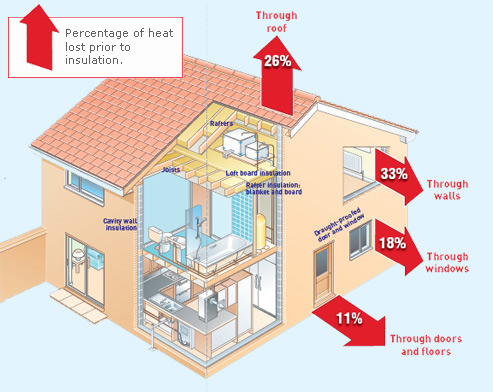
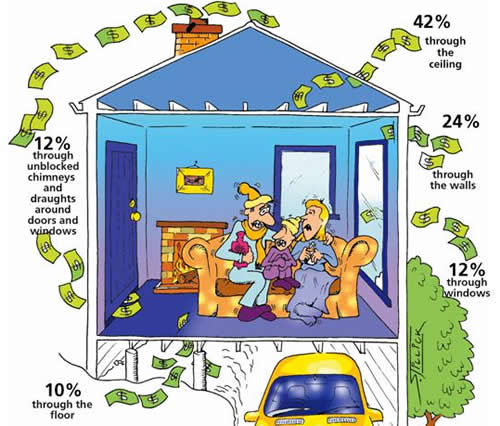
* Windows - 20% of your home's total heat loss is attributed to deficient windows. Energy efficient windows help reduce the four types of heat loss (conduction, radiation, convection, and air leakage) because of their advanced technologies like low-E glass, quality frames, multiple paned glass, gas fills, and warm edge spacers. These technologies work together to lower the "U Value" which is the rate at which a home loses heat.

o Low-E coatings are used to reduce overall radiative heat flow.

o Quality Frames help to insulate the window and reduce heat transfer.

o Multiple panes work together to provide greater insulation. There are at least two panes of glass in an energy efficient window.

o Gas fills, which are generally argon or krypton, reduce the conductance between the two or more window panes.

o Warm Edge Spacers insulate the window, prevent condensation, and hold the glass panes the proper distance apart from one another.

* Attic Insulation - The greatest amount of energy loss occurs in the attic. Many attics are already insulated, but they were done so improperly or using improper insulation. Knowing the right type of insulation and how much of it you need is dependent upon your geographical location. Your local energy savings expert can help to give you an idea on what options are best for your home.

* Lighting - In many homes lighting accounts for 15% of the total electric bill. CFLs (Compact Fluorescent Lights) are 75% more efficient than incandescent lights. In addition, they will give you ten more years of life than a traditional incandescent light.

* HVAC System - Nearly half of your energy bill will be spent on home heating and cooling costs. A home energy audit can help you discover what size HVAC system will be right for your house as a system that is too big/too small will be very inefficient and will ware faster.

* Ductwork - Up to 40% of your furnace/air conditioner's energy use is wasted by a leaky duct system. A leaky duct won't be able to carry all of the air that your furnace/air conditioner is producing to the rest of your home. This will not only reduce comfort, but also take your furnace/air conditioner longer to heat your home which results in higher energy costs. A leaky duct has a tendency to take "dirty air" from your crawlspace, basement, or attic and circulate it throughout your house.

* Water Heater - Installing a tankless water heater can reduce the cost of heating water by 45%. A traditional tank-type water heater will continuously heat the water in your tank regardless if you use it or not, meaning you are paying to heat something that you may or may not use.

Instead of storing water in a tank, a tankless water heater heats water en route to its destination. The heating mechanism will only turn when you turn on your dishwasher, operate a washing machine, or open a hot water tap.

Recap

Home energy audits aren't scary like the tax audits. These are designed to save you money by identifying the precise locations in your home that need to be upgraded with energy efficient appliances.

Many people are satisfied with their energy bills, but their bills could be so much less after conducting a home energy audit. Home energy audits will definitively reveal what areas of your house are costing you the most money on your energy bills.

Source: http://www.artipot.com/articles/863972/a-home-energy-audit-is-a-good-thing.htm

Sunday, 28 December 2014

What is a Home Energy Check Up and How Can it Help Me?

Are you aware that you might not be using your energy efficiently? A home energy check up analyzes your energy usage in order to give you a guide on how to use your energy efficiently; thus, saving you hundreds of dollars while maintaining comfort in your home. Using the same amount of energy yet getting the lowest cost is good for your budget, but there are numerous ways in which you can lower your energy consumption and save more money on your energy bill each month.

This reduction in energy consumption is also good for the environment: the less energy human beings use, the less energy is produced, and the less energy will be put to waste unconsciously or intentionally and there are many alarming bi-products have to be dealt with. We should not just be concerned on our personal finances but also on how to lower our energy bills; we need to think of better and effective ways to reduce our energy use as well. One way of knowing how we use our energy whether efficiently or inefficiently is to conduct a home energy check up. It can save the environment and it can save you hundreds of dollars by energy saving. The fact is that the number one biggest expense in your home is your power bill. And if you are located in an area with extreme weather climates chances are your energy bill is twice as the regular household's bill in areas with "normal" climate. For example, if you live in the desert or warm areas with very hot temperatures you are forced to turn your air conditioner's thermostat to its maximum level to cool your home, in doing so your cooling energy bills can be extraordinarily high especially during summer, or if you are in extremely cold areas, your winter heating bill will be high.
However, you have the power to reduce the cost of your energy bill by making some changes. Doing a home energy check up can guide you in deciding what needs to altered or maintained. There are many things you can do to have an energy efficient home. After conducting a home energy check up you may decide whether to switch to energy efficient exteriors, change your traditional lights to energy efficient bulbs, or schedule an energy saving hour.
Your attitude towards how you use your technology also affects your energy consumption. If you have kids and they tend to forget to switch off the television set after watching or if they are used to putting the computer to sleep mode instead of turning it off after using chances are you will still have bigger energy bill cost. Educate your children and other household members about energy saving and how wasting energy can harm the environment. Help them understand how to use the switch off button.
Little steps like this can make a big difference in your finances and to the environment. It is not enough to have a home energy check up; it is just the beginning of energy saving and is well worth your time and effort.

Article Source: http://EzineArticles.com/4408835

Sunday, 21 December 2014

Learn 8 Easy Steps to Reduce Your Home Energy Bill And These Will Not Cost You a Dime

Before you think about adding renewable energy sources to your home, it may be a good idea to cut down on your home energy usage first. That sounds logical as not doing so is like leaving the windows open while the A/C is running! Maybe that is a stretch but I think you get the point. If you are thinking of adding solar or wind energy to your home, cutting down on your energy usage will only reduce your renewable energy investment.
Change Your Daily Habits: Sometimes the most difficult things to change lie between our two ears. Most of us probably did not arrive overnight at the bad habit of leaving the lights on while no one was in the room, or even worse...not even home. Yet, changing our daily habits can make a significant impact on home energy usage. And the best part, they do not cost us a dime.
1. Reduce Light Use - One of the easiest ways to cut energy costs is to live by the rule: one light on per person in the house. If that is a stretch for your family, challenge them by turning off unused lights until you get down to one light per person. Make a game out it and give a reward to the person who uses the least amount of lights. Sometimes, taking baby steps is the best way to go. And those small changes year-over-year will begin to add big dollars to your bank account.
2. Keep Unused Rooms Closed - There is no need to cool or heat rooms that are not in use such as the attic, basement or laundry room. Close doors and vents in unused rooms to keep the comfortable temperatures where your family is...and at a lower energy cost.
3. Close Garage Door - All day and night the house is either heating or cooling the garage so think twice before sending this stored energy to the wind...keep it! The garage is a form of insulation, and a good idea to keep in mind since heating and cooling costs can count for up to 25% of your energy bill.
4. Close Up Unused Fireplaces - since hot air rises, this is a more important rule in the wintertime. Opened fireplaces will create a natural vent for your hard earned heating dollars to escape.
5. Adjust Thermostat - adjusting the thermostat by 15 degrees for eight hours can reduce your electric bill by 15%. 15 degrees seem a bit extreme...try 5 degrees for a week then progress from there. And with programmable thermostats today that allow you to set your daily and weekly programs, this can make lowering your energy bill a simple chore.
6. Window and Blinds - although this may not have been high on your energy conservation list, opening or closing your windows, blinds or even curtains can have a positive effect on your energy bill. Instead of reaching for the A/C thermostat, try opening windows instead to vent hot air in the summertime, especially the upstairs windows if you have upper floors. Even using a fan near windows to blow hot air outside can be a lower energy usage choice than the A/C. If the A/C or heater is a must, closing the blinds and curtains can be a great way to help insulate your home from the weather. An exception to this rule is if your windows face the sun in the wintertime. In this case, open the blinds and curtains to let the solar energy in.
7. Bundle up or go naked - this one was probably not on your list, at least not on any energy conservation one. Instead of turning on the heater, throw on a sweater instead. And in no time, you will save enough money to buy a new sweater. For those hot summer days, go light on the cotton. How light is up to you, but keep the neighbors in mind if you leave the blinds and curtains open.
8. Cook Outside - instead of using the stove and heating the house, try cooking outside with your barbeque during the summer months. That way the stove, or secondary heater, will not be competing with your home cooling system.
With energy costs on the rise and renewable energy sources requiring an investment in time and money, changing your energy consumption habits to cut your energy bill is the best first step for most. And why not, it does not cost you a thing!
Keith Garrett is a solar energy and wind power enthusiast for the home. His website at [http://www.solarwind4homes.com] offers knowledge and tips to the home owner on transitioning to renewable energy in the 21st century.

Source: http://ezinearticles.com/?Learn-8-Easy-Steps-to-Reduce-Your-Home-Energy-Bill-And-These-Will-Not-Cost-You-a-Dime&id=4051342

Sunday, 14 December 2014

Top 10 Ways To Save Money And Energy

There are many ways to save energy and money at home. These are some of the things that I've done.

• #1 I replaced my SUV with the plug-in hybrid Chevy Volt. This saves me several thousand dollars a year in gas since I mostly drive in electric mode. I save even more when gas prices rise.

• #2 I now use a pellet stove as the only means to heat my home. The pellet fuel and the electricity to run the stove cost about $1,000 per year. Pellet stoves aren't a solution but a great way to reduce your dependence on home heating oil sticker shock.

• #3 Insulating your home is one of the best things to do. In the attic, I double insulated my attic floor, put in an attic radiant barrier and an attic solar exhaust fan. I also put an insulating cap on top of the attic stairs. I also installed insulating curtains on all the windows and put window film on the actual glass.

• #4 If you heat your water using electricity, you have a few options. I first started saving by installing a simple gray box hot water heater timer. Setting the timer box to come on for a couple hours in the morning and in the evening was sufficient enough and it saved a lot of electricity.

• #5 I replaced the gray box timer and installed one of the first Energy Star Heat Pump Hot Water Heaters. The average person will save over $300 per year with one. In simple terms, the heat pump takes the heat that's already in the air and puts it in the water tank. This is much more efficient than powering a heating element in the tank all the time.

• #6 I grow my own organic food for part of the year. For part of the year, I don't have to buy basil, lettuce, tomatoes, zucchini, potatoes, blueberries or strawberries. Once you establish your initial garden structure you'll save money as the years go by.

• #7 You can save $10-$30 per month on natural gas or electricity just by hanging your laundry. You can go even further by getting a centrifuge laundry spinner that squeezes out an extra quart of water before you actually hang the clothes. This three minute laundry spinner will cut the drying time in half whether you hang the laundry or still use a dryer.

• #8 I killed most of the phantom or vampire electrical loads in the house by using properly sized power strips. You'd be surprised how much it costs to power a cable box, a microwave clock, a TV or even a garage door opener when it's not in use. If a power strip is too much of a hassle, they make remote controlled ones now.

• #9 Using less water saves in a few different ways. I use basic adjustable low flow shower heads, dual flush toilets and sink aerators. Less water used means less waste water and less energy needed to heat it.

• #10 I use fans instead of air conditioning unless there's a heat wave. You'd be surprised how cold you get when sleeping with a fan blowing on you. If you have to use AC, experiment by setting it a few degrees higher and using a fan.


Source: http://www.youtube.com/watch?v=5SqPOeaYMUw

Sunday, 7 December 2014

Benefits of a Home Energy Audit

With the right home energy auditor, there are many benefits of getting a home energy audit. Complete home energy audits can save your money on home energy bills, increase your homes comfort, improve your homes resale value and marketability, help you to take advantage of government incentive, and help the environment.

Save money on your home energy bills

If your home's energy bills are through the roof, then a home energy audit would be a major benefit for you. Your energy bills can be affected by many things. From small spaces around your windows and doors that aren't keeping in your conditioned air, to a large water heater that is using more energy than it needs to. A complete home energy audit will pinpoint the exact ways you can lower your home energy bills.

Not only will a home energy audit identify where you can save money, it will also prioritize the issues so you know which changes would make the most difference for you.

Increase your home's comfort

A key problem that many home energy auditors find in homes is air sealing. When a home energy auditor identifies air sealing as a problem, and fixes the problem, you will literally feel the difference in your home. The changes in your home will be night-and-day, there will no longer be cold drafts in the winter or hot bursts in the summer which will not only make you feel more comfortable, it will also save you money.

Improve your homes resale value and marketability

Another benefit of a comprehensive home energy audit is that it will increase the resale value and marketability of your home. According to a study published in the Appraisal Journal, every $1 decrease in annual energy costs increases the market value of a home by $20. So, you are not only saving money annually, but also making sure that you make money when it comes time to sell your home.

Homeowners that implement suggestions from a home energy audit also increase the perspective buyers' chance of buying their home. Home buyers will be pleased to hear that you have made changes to decrease energy bills and keep the house more comfortable.

Take advantage of government incentives

Recently the government has offered incentives to make energy efficient changes to your home. By receiving a home energy audit you are eligible to take advantage of the government's rebates and tax incentives.

Help the environment

Lastly, a complete home energy audit helps the environment. When you implement the improvements recommended by energy experts you use less energy, therefore reducing the amount of greenhouse gasses and pollution created. When your home isn't expelling as much energy to heat or cool it, to run appliances, or to light your home, you're saving money and helping the environment. 
 
Source: http://www.artipot.com/articles/1113228/benefits-of-a-home-energy-audit.htm

Sunday, 30 November 2014

Aspects of a Full Home Energy Audit

Many homeowners are looking for ways to make their home more energy efficient and save money on their utility bills. Often times the energy company that performs a free home energy audit only checks obvious areas like lighting and air sealing.

It is important that your home energy auditor performs a complete home energy audit. Vital aspects of your home that should be checked in a home energy audit include:

*Heating and cooling system: Learning about the energy efficiency of your heating and cooling system is essential. If this is not checked there could be an abundant amount of energy being lost that you do not even recognize. Heating and cooling accounts for a large amount of energy use in your home and can be a major source of energy loss as well. Getting a complete home energy audit that assesses your heating and cooling system is something that you don't want to go without.

* Sealing: Although air sealing throughout your home is an obvious check, make sure it fully evaluates the air sealing. Simply checking around windows is not enough for your energy audit. A proper one should check for air leakage in your attic, foundation, and around any vents that may be letting in unwanted air.

When places are found throughout your home that are not sealed properly, it should suggest fixes such as insulation in the attic or basement, caulk and weatherstripping around doors and windows, and foam gaskets behind outlet and switch plates on walls. These fixes will keep in the conditioned air so that you are not wasting energy heating or cooling the outside, unconditioned air.

* Insulation: They are only complete when the insulation in your home is fully assessed. Many homeowners believe they have enough insulation in their home when this may actually be a major cause of energy loss. Simply checking to see if there is enough insulation is not a complete energy audit either though. Assessing your insulation r-value is essential.

The r-value of your insulation determines how well your home is insulated. This value depends on the type insulation that is in your home. A full one will assess this and let you know if you need to improve the insulation in your home to save energy and money.

* Lighting: Lighting is a simple fix, but is not always addressed in a free home energy audit. A proper one should be extensive and definitely address the lighting in your home. With new lighting technologies, the energy you use for lighting could be reduced by 50-75%. Installing energy efficient compact fluorescent light bulbs (CFLs) throughout your home will save energy and money every month.

* Appliances: It should also include an assessment of the appliances you already have and the way that you are using them. Dishwashers, refrigerators, washing machines, and dryers all must be checked out to achieve a proper understanding of the energy you are already using. When that is established, your home energy auditor should then be able to give you solutions to save money when it comes to your home's appliances.

All in all, it is extremely important that you receive a whole-house energy audit to discover your home's energy efficiency and ways that you can save money. If it looks appealing, make sure that the auditor addresses all aspects of your home and fully assesses every area where you could possibly be losing energy.

Source: http://www.artipot.com/articles/1112441/aspects-of-a-full-home-energy-audit.htm

Sunday, 23 November 2014

Selling Your Home For a Profit? Think Home Energy!

The housing market is packed full with a lot of homes right now. It's still a buyers market. The big, small, ready to move in and fixer uppers, and all within your price range as a home buyer. So how do you decide which one to choose as your next home, as a buyer? And if you are a seller, how should you make your home more attractive to potential buyers that your house is selected as the next home of the buyer, among a multitude of other options?

Of course, there are the traditional methods of leaving all the lights on, and cleaning up the site, remove clutter, reduce the furniture count, etc. But from an energy perspective, how do you really make your home more attractive? One of the bonus guides in the professional version of the Home Energy Audit Kit is the Energy Homebuyer checklist, which outlines several important areas of a house to look at in terms of energy consumption and energy loss. As a seller, your job is to ensure that all elements of this list are available for any potential buyer to see. In other words, you should use the list too!
One of the easy things you can do is to highlight the effectiveness or energy efficiency of your appliances, or equipment left at home after you move. The big ones most look for are the furnace, hot water heater and air conditioning units (central air), in addition to fridges and stoves/ovens. Everyone of these has a number of energy labels on them (at least in North America) that shows how much energy the unit uses, and compares it with the most efficient and least efficient model tested in a government laboratory.
Do not worry if the unit isn't a high efficiency (HE) unit, or if not at the top of the measurement scale. While it is important to note, what most people do not understand about these stickers is that it all depends on the buyer's usage. The new owners of this house will not use the device in the same way the seller does. So their costs are different.
Also, make it a point to respond to any energy information when asked. The most common question is "What is the average electricity bill in January? Or July?". Or perhaps they will ask for the heating bill, or natural gas bill. Here's a nifty trick. When people ask for an average or an example of the bill, tell them the budget payment, if known...and be sure to mention the payment type as being budget. A budget payment is the weighted average cost of energy in a period of usually 6-10 months. Most people understand this. It has the added advantage of the smoothing out the peaks and valleys of your usage and costs, so to speak, so you do not have to reveal your electric payment one month was $300 - because when averaged out, you only really paid $126 per month. And what sounds better than a buyer with a limited budget? An electricity bill of $ 300 or a constant, budget-friendly cost of $ 126?
Do not volunteer this information unless asked directly, or if there are appliances that can be a concern for potential buyers. For example, most people are very wary of old furnaces and air conditioners, but what almost no one notices is the insulation is more important than a new HE (high efficiency) oven, furnace, or unit in most cases. However, buyers can not be sold on this house, because the oven, furnace or other appliance is old. You may be able to ease their minds by telling them that budget heat or natural gas payment is average, and give them the budget amount.
There are, of course, many many many more areas of opportunity to help sell your home for more and actually make a profit for yourself. I recommend you check the Energy homebuyer checklist as part of the Professional Home Energy Audit Kit for more tips and of course, follow them!

Article Source: http://EzineArticles.com/3705944

Sunday, 16 November 2014

How to Make Your Home Energy Efficient and Get OFF THE GRID!

Tips to Make Your Home Energy Efficient
With the financial situation that the world is facing these days many people are trying to find a way to save, save, save. By making your home energy efficient it will save you money in the long run. Your monthly electricity and gas bill will be decreased if you make your home energy efficient. Insulation is a key to maintain the comfort of your house inside. If you have the right insulation put into your home you will see your power bills drop. There are places in your home that should be insulated that you may not have thought of such as floors, ceilings, basement walls, overhangs, and the walls inside. Wherever air is leaking into your home it is making your power bill increase. So you need to be sure that all cracks and crevices are sealed tight. You can help make your home energy efficient by replacing your lighting fixtures with energy efficient models. You should make use of your dimmer switches also because this saves energy and money. Open up your blinds and curtains and let the natural light shine in this is how you can save the most on your bill and it is the best way to conserve energy.
When you are using your home appliances you are using a lot of energy. The best way to save energy here is to shop for new appliances that have the energy star. The cost of these products may be higher then normal but they are worth the extra money in the long run.

Also - TV's use a hell of a lot of energy so why not turn them off during an evening and go out and enjoy yourself - take your family out, experience the great out doors! Sounds cheesy I know but it works! Install some solar panels - this will make your home energy efficient. Energy is created with these using natural resources. Solar panels can come in the form of a solar thermal collectors that help the suns energy heat water. What a great way to use the suns natural energy and to make your home energy efficient. Install a wind turbine or build your own wind farm in your back garden! Wind Mills can produce a lot of what is essentially - FREE - energy from a renewable source that is the wind!

The best way to make your home completely energy efficient is to get off the grid by making your own own energy producing devices. Build your own Wind Turbines, Solar Panels and convert your home to Green Power. Not only is it cheaper to build your own rather than buy them but it is also very rewarding! Once you've built your own windmills and solar panels you could be producing more energy than you can consume so in which case you could start selling your "Homemade Energy" back to the grid! This will offset the initial price of building your own wind turbines and solar panels and give you some extra cash to spend on cooler things! Green Power Easy is a Brand New DIY Green Energy Course with Step By Step Videos which teaches you how to:

Build Your Own Solar Panels
Build Your Own Wind Turbine
Completely Convert Your Home to Green Energy
Live off the grid with the "Free" alternative energy you produce
Start your own green-power business.
Save Our Planet and Your Money!

Article Source: http://EzineArticles.com/3082954

Sunday, 9 November 2014

Performing a Quick and Easy Home Energy Audit

In recent years most of us have been plagued with rising energy bills. In many cases energy bills have risen to such an extent that they are causing financial hardship. Our dependence on fossil fuels, which are non renewable, will cause energy prices to rise even further in the future. There are many simple common sense actions that can be taken to reduce energy costs and consumption. These can range from replacing the incandescent bulbs with energy efficient fluorescent bulbs to simply turning down the thermostat. Heating and cooling costs account for the greater part of most energy bills. Most new homes are built to be energy efficient but many older homes have not been upgraded for energy efficiency. Many older homes are drafty and lack sufficient insulation. For older homes auditing your homes energy is a must. There are many companies that do these audits but they can be pricey. A home energy audit can be done easily and can be the first step in identifying problem areas that are costing energy and money.

A home energy audit will help to determine the efficiency of your home's heating and cooling systems. It will also reveal how to reduce waste and conserve those valuable energy dollars. The first step in any home energy audit is to determine where energy is escaping unused. Reducing drafts in a typical home can result in energy savings of 5% to 30%.

Checking for drafts is relatively easy. Checking windows, baseboards, electrical sockets, fireplace dampers, doors, and other obvious places will probably reveal several places where simple repairs will solve the problem. Checking the exterior of the building is a very important of any home energy audit. Checking exterior corners, foundation areas, and places where chimneys and siding meet will often reveal gaps that can be easily caulked or repaired.

One of the most important parts of any home energy is checking for adequate insulation. Many older homes are woefully under insulated. Insulation has what is known as an 'R' value. Be sure to check for the recommended 'R' value for your area. Check in all the obvious places like the attic and walls. Look for gaps and make sure there is a vapor barrier. A well planned and thorough home energy audit will show where energy is being wasted. Develop your own annual home energy audit that fits your own needs. Then take the necessary actions and start saving money!

Article Source: http://EzineArticles.com/2862192

Sunday, 2 November 2014

Top 10 Energy Saving Tips

A correctly installed solar home energy system can cost as little as $ 200 for a homeowner to manufacture and install and with the potential savings nearing close to 80% of a normal household electricity bill it is not hard to see why a solar home energy system is fast becoming a popular home addition. In some situations over production can lead the homeowner into a position of being able to sell his surplus solar power back to the electric company thus making a profit on the overall situation. The sun's energy is the most abundant energy available on earth and by employing this free source a homeowner not only reduces his consumption of "manufactured" electricity but also contributes to a greener world.

A solar home energy system has many advantages apart from being cost-effective and environment-friendly. They are low on maintenance thus saving time and effort. Also, solar home energy systems give you a return on investment very soon, thus making the systems free after just a few weeks or as illustrated above a profit could be experienced if over production occurs, indeed it would be best to bear in mind this situation when designing the system to ensure an over production. If space allowed the installation of extra solar panels then this would provide an ideal income source.


Source: http://www.youtube.com/watch?v=7-BTKkZxvJ0

Sunday, 26 October 2014

Home Maintenance And Energy Saving Tips : Chapter 1

Have you ever considered installing your own solar home energy system ? The sun has always been a source of heat and light energy. Now with the advancement of technology, the sun's power can be used to create other forms of usable energy.

With the world moving towards a deepening energy crisis, it is important that we reduce our dependency on non-renewable sources. Three types of energy solutions fall into the category of renewable energy: solar energy, hydro energy and wind energy. For the homeowner a solar home energy system probably is the best choice. Hydro energy is not really a viable option plus there are some concerns about using this energy because it is believed to adversely affect the water-borne flora and fauna. Wind energy would be a viable alternative depending on the physical setting but there is concern that power generating windmills could be unsightly if not mounted in a discreet location and this may not always be possible. Although in the correct situation wind power could be a workable solution and could also be used in tandem with a solar home energy system.

With a solar home energy system the solar panels can be placed in a relatively obscure location thus not becoming aesthetically displeasing plus with the advent of continued development it is now possible for the construction of the required components and the installation to be carried out by the home handyman. There are a number of instructional publications now available authored by expert professionals who have spent much of their working life studying and implementing solar power solutions. The publications give detailed step by step instructions on obtaining the materials, constructing the solar panels and then the subsequent installation as well as the legalities.


Source: http://www.youtube.com/watch?v=Td6vlXtJP2M

Sunday, 19 October 2014

Top Reasons for a Home Energy Assessment

As energy conservation becomes more and more of a priority for homeowners, many people are opting to receive home energy assessments--also frequently called home energy audits. There are steps you can take to assess the level of energy consumption in your home and identify opportunities to reduce it. However, a professional energy auditor may be able to more closely hone in on the problems and target the areas where energy saving is most possible.   Whether you take the DIY route or hire an expert, a home energy assessment is important for several reasons--here are five of them:

1. Save money! Many people take the energy efficient route because they believe it will save them money, and in the long run, they're absolutely right. Installing a programmable thermostat that switches into conservation mode when you're not at home; getting better insulation in your attic; putting in new, energy-smart windows…all of these actions will, in time, save you money.

2. Earn money! Another reason many people receive home energy audits is because it makes them eligible for rebates of some kind. Whether from a governmental rebate program, your power company or the manufacturer of an Energy Star appliance you recently purchased, rebates from anywhere are appreciated and a great way to cushion the cost of making energy-saving upgrades.

3. Enhance your level of comfort. If you have drafty windows or doors, you know they can be uncomfortable in colder months. Livable attic and basement space is often difficult to equally heat or cool alongside the rest of the home. Keeping your home more consistently comfortable, and doing so in a manner that doesn't waste energy and money, is one of the greatest benefits that comes from making changes based on a home energy assessment.

4. Professional home energy assessments vary depending on who performs them, but comprehensive audits will include things such as carbon monoxide testing; checking of the ducts; inspection for mold or moisture in the home; and the inspection of the home's ventilation. If problems are found, they are not only energy inefficient, they can also be dangerous to you and your family. Potential safety threats found in a home energy audit should be dealt with immediately.

5. If you're planning to rent, sell or make improvements to your home, a home energy assessment is a wonderful idea. If you have dated appliances, a hot water heater or an HVAC system that will likely need replacing regardless, do so with an energy efficient model. For whatever reason you're planning to make upgrades, it is most sensible to do so with energy efficiency in mind.

While home energy assessments may seem superfluous, they offer a valid, solid foundation on which you can make an action plan for saving money, improving the comfort of your home and ultimately making your property safer and more valuable. You don't necessarily have to spend thousands of dollars and months of time making all the energy efficient improvements you need simultaneously. But, as a homeowner, it is wise to know where the problems and challenges lay and have a course of action in place to resolve them.

Source: http://www.artipot.com/articles/1317394/top-reasons-for-a-home-energy-assessment.htm

Sunday, 12 October 2014

The Best Way to Save Home Energy Revealed

Home renewable energy is a rapidly growing interest for many home owners. When it comes to household bills and expenses, nothing ever seems to get any cheaper. The cost of natural fuel sources is increasing at an alarming rate and, not surprisingly, our gas and fuel bills at home are also on a sharp increase. These reasons largely contribute to a rapidly growing interest in people looking for alternative and cost effective ways of how to save on home energy. There are a number of very simple and relatively straightforward ways to do this that a large proportion of home owners generally overlook. Here are just 3 of the most frequently asked questions when looking for alternate ways on saving on home energy:

1) Why Should I Consider Home Renewable Energy?
This question is one which you should come to terms with before any other. First and foremost, ultimately you want to save money on your electric bill. For reasons outlined above, this is the primary goal for your reasons for saving home energy. The other benefit is that you will be doing your little bit for the environment. By burning less energy at home, you are helping to reduce the amount of harmful toxins and emissions that conventional energy producing methods generate.
2) What's The Easiest Way For Me To Save On Home Energy?
There are many small and simple steps you can follow to help save home energy that many people overlook. These are things such as turning lights off when not needed, switching to low energy lights, keeping doors closed (particularly in colder months), not leaving electrical items on standby, buying energy efficient electrical items and turning your thermostat down a degree or two. However the biggest impact you can have is to generate your own free electricity by building your own solar panels or wind turbine.
3) How Much Will Home Renewable Energy Initially Cost Me?
Most of the tips above cost nothing to implement. All you need is a small degree of discipline. You're the one who's paying for your heating and gas bills so why waste it by leaving doors and windows open when it's cold outside - but you would be surprised how many people actually do!! They are simple steps which cost you nothing.
However, to make a real impact, a small but very prudent investment may be needed. The best home renewable energy products on the market today by far are solar panels and wind turbines.
These forms of home renewable energy are being recognized more and more with home owners across the world as a viable, cost effective means of saving home energy. It is quite possible to build your own solar panels to generate home electricity for under $200 and these will provide a long term, free, sustainable and clean energy supply for your home for years to come.
If you decide to generate your own Home Renewable Energy [http://www.homediyenergy.info], you will have a satisfying and rewarding experience provided you follow instructions which have been written by the professionals.
They should be well structured, clear and organized and you should have access to help if you should need it.

Article Source: http://EzineArticles.com/2701608

Sunday, 5 October 2014

Do You Really Need A Home Energy Yardstick?

You need to know that the U.S. environmental protection agency or more often called EPA is the one in charge in creating the home energy yardstick, to help all the consumers to compare their energy usage with some other homes. Should you might want to know if you are making use of your energy economically in your home, then chances are you ought to try using the home energy yardstick today.

Making use of home energy yardstick may help you compare the energy utilization of your home and to your neighbor. The home energy yardstick can be another tool which we make use of to assist you to save energy and of course save money. Aided by the home energy yardstick you don't need to expend a lot of money just to manage to use this tool. All you need is your 12 months previous energy bill, size of your house and then just click a button. When you finally use the home energy yardstick and you have compared your consumption with the other homeowners, it will be easy to know if your energy usage is efficient or possibly you are using much energy than needed. It enables us to know if our energy usage is efficient as well as you are using much energy than needed. Having to deal with this kind of information it is possible to know if you have been very wise in using your electricity at home or you might have been wasting it. In working with your energy at home, you'll need to be sure that you will get rid of the unnecessary electronic devices from your home to ensure that your energy saving.

You can ask why you would need to save energy or perhaps use home energy yardstick. That question might sound like a silly question, but of course almost everyone knows that we all need to make it a habit to save energy in our homes. As you may know that the costs will keep going to sky rise at a higher rate if you are to compare it 15 years ago, there's a chance you're one of the wisest persons that are seeking for solutions on how to utilize your energy efficiently.
 
Source: http://goarticles.com/article/Do-You-Really-Need-A-Home-Energy-Yardstick/3884447/

Sunday, 28 September 2014

Revamp Your Home With Marvelous Renovation Styles

Home improvement, remodeling are some of the many terms used for renovations done in home. Building stylish and high end homes have become a trend and spurted the growth of several home furnishing brands. Making additions to one’s home without the knowledge of interior decoration or designing is not a very good idea. Thus, several designers have now emerged to provide solutions to people who wish to have a classy home. Currently this industry is a booming sector and is poised to grow further in the coming years as the preferences of people gets more refined. 

What is Home renovation all about?
Home renovation process usually involves altering the structure or construction of existing home that covers lawns, garages, gardens and other outdoor structures. The renovation for improvement projects might also involve electrical work, maintenance and other general servicing tasks. The primary goal of all the above activities is to increase the comfort, create space if required and revamp the entire look. It might also include ensuring safety and saving energy to reduce utility costs. Home improvements can be done by hiring of general contractors, specialized contractors or you can do it yourself with DIY home improvement kits.

Home Renovation Industry
Since homeowners have grown more conscious about improving the appearance of their home, home improvement industry has undergone a huge revolution. Several designing firms are now bringing fresh home renovation ideas to the table. Some companies have also gone online to dive into this new emerging market. Several professional associations offer services to homeowners in the form of experienced architects, home decorators and also educate them about the varied trade guidelines. These days there are thousands of magazines, TV channels and consultancy firms who offer varied ideas for home renovation.

Current Trends of Home Renovation
Home renovation ideas can be categorized for kitchen, bathroom and rooms. Kitchen happens to be the heart of a home and you should carefully choose slip-resistant surface materials such as granite and laminate that last for years. A kitchen should have bright lighting, should be placed such that places like the island and the cook top are well lit for safety. Opt for stylish cabinets out of veneer or wood with glossy finish where you can hide away the containers& utensils.

Create color contrasts with cabinetry and wall paint it’ll prove to be a visual treat. Pullout wardrobes and wall ovens are great additions. Bathroom remodeling is pretty easy with a few tricks and tips. For bathrooms you have to play it cool with bright colors on the walls or floor tiles. Experiment with textures and patterns on curtain fabrics. Incorporate stylish metallic fixtures that match your bathtub. Use large mirrors that reflect a lot of light. Outdated floors can be covered up under a new bath mat. Living rooms and bedrooms can be tastefully designed with various themes such as cottage look, traditional, vintage and contemporary. Utilizing every nook and cranny is the best trick. Hang chandeliers in living rooms to draw attention to the ceiling. A small fireplace can be decorated with showpieces and artworks. Seating arrangements for small rooms can be limited to few chairs and a coffee table. Large living rooms can have three seated sofas and wing chairs. Upholsteries and window treatments should match your furniture style and wall paint to create a uniform effect.

Source: http://goarticles.com/article/Revamp-Your-Home-With-Marvelous-Renovation-Styles/8266612/

Sunday, 21 September 2014

home energy savers

They can be accessible even in remote counties. An additional vitality conserving candle bulb is the bulb that you use in your lampshades. It can make your rooms in the house have that spacious feeling. And they look and feel romantic way too specifically if you set in the colors pink and red. Hmm...now that's what you name a red mild special. Of program, some communities the following in the US are subsequent Germany's illustration of a residence photo voltaic vitality procedure. In Denmark, there is a prototype coal-fired strength plant which no for a longer period emits ash to the air but quite underground. Ideally, this can be emanated here in the United States and in China, which has the most amount of coal-pushed electrical power crops in the world.

But that's previously on a maximal scale. Let's have some more examples of electricity-preserving devices in the house. It's mainly because naturally, your electric power charges will reduced if you preserve vitality in your possess home. Really don't you like it?

With winter season coming up, quite a few men and women are acquiring that their property electrical power invoice is skyrocketing as the temperature drops. And in this time of economic crisis, it can be difficult acquiring the income to fork out people heating charges. Happily, there are many strategies to reduced your electric bill. Are you adhering to all these home power saver strategies?

  • Install CFL fluorescent bulbs in all your mild fixtures. This is one particular of the easiest and surest tactics to help save income. Despite the fact that the bulbs are extra highly-priced than normal incandescents, they very last a lot lengthier and conserve funds just about every month on your electrical bill. And they are now accessible in warmer colours, so you you should not have to contend with the white. glaring light of times previous.

  • Unplug electrical products you aren't making use of. Despite the fact that it can be a ache, you should normally unplug goods you aren't using, mainly because they typically draw ability even although they may perhaps be turned off. For illustration, if you certainly not use the clock on your microwave, that is electrical power currently being invested to continue to keep it on for no excellent reason.

  • Clean out or change your AC/heater filter when a month. It's important to preserve individuals filters clean - a dirty filter indicates the unit has to get the job done more difficult - that's significantly less successful.

  • Seal leaks exactly where drafts can arrive in. Use caulk to seal leaks about door and window frames. Set a 'draft stopper' at the base of doorways - even a rolled up towel will do. If your windows are outdated and drafty, think about large curtains to insulate them.

  • Lower your thermostat at evening. It's been revealed that individuals rest additional easily when they are slightly cooler, so decrease the temperature at night time - decreasing it by ten degrees quickly adds up in savings. As a make a difference of point - think about holding your thermostat set a little reduced in the day time as well - and use a sweater close to the residence.


On-line sources that have been created by the United States Energy Department, dwelling energy savers aim to aid the two shoppers as properly as the industry experts in analyzing different facets of use of residence energies.

Source: http://goarticles.com/article/home-energy-savers/4972770/

Sunday, 14 September 2014

10 Do it Yourself Steps to Home Energy Savings

With the current slump in the economy, it seems that everyone is looking to save money and cut expenses wherever they can. A potential savings that's overlooked by a lot of people is home energy conservation. While there has been a lot of talk of renewable and alternative energy sources, there are several, easy "do it yourself" projects that can add up to big savings on your energy bills. I've put together a list of 10 that only scratches the surface of ways to cut back on consumption.


1. Add and Improve Insulation- Insulation may be the single most important element of energy efficiency. It is critical that you have sufficient coverage in the key areas, which include: walls, ceilings, floors, and attics. The most obvious place to start is the attic and ceiling, which in many cases are are the same. Unless your home is extremely old (more than 50 years), chances are, there is some amount of insulation in the attic or ceiling. Adding more will only help to block the heat or the cold from spreading to the living spaces inside the home. Adding additional insulation to the attic is a, fairly, easy job if it is accessible. The most common type to add will be fiberglass batts, which come in various lengths, widths, and thicknesses. The width and thickness are made to accommodate various wall and ceiling cavity sizes between studs, rafters, and ceiling joists.
However, when adding insulation in an attic, this, most likely, won't be a factor, since you'll be laying it over the existing. The other option is blown insulation, which is a loose material that is by use of a blower. While this provides good coverage, it is a messier and more complicated process. But if you're up for the challenge, you can buy the insulation and rent the blower in some hardware and home improvement stores. Insulating walls in existing homes is a little more challenging due to the fact that the wall cavity has been covered up with drywall or other wall coverings. The expense and work associated with opening up the wall is probably not worth it unless you have an older home with no wall insulation. There is one option that I used on garage that we were converting into a bedroom. At the top of the wall, near the ceiling, we cut holes roughly 6"x6" between each of the studs in the exterior walls and blew in the insulation. We then repaired the drywall in the small spots rather than replacing it on the entire wall. If your home is built above the ground with a crawl space or if you're in a mobile home, it's important to be sure that the floor is properly insulated. This will not be an easy job because it will involve either removing the flooring to work from above or crawling on your back from below. Both of these options involve a lot of work, but if the floor is not properly insulated, heating and cooling the home will be extremely difficult.

2. Attic Ventilation- Proper attic ventilation is critical to efficiently heating or cooling your home. When hot, cold, or moist air remains trapped above the ceiling it will travel into the home below even if the ceiling has been insulated. Ventilating the attic can be accomplished several ways and the better the ventilation, the better and easier the air comfort below. The most common methods are soffit, ridge and turbine vents. Even if you're not familiar with the terms, chances are, you've seen these before. Soffit vents are found in the eves around the perimeter of the house and may be small louver type or continuous with a screen. Soffit vents usually work in conjunction with roof turbines and gable vents to move a flow of air through the attic space, thus, bringing the temperature up or down with the outside air. Ridge vents are long plastic vents that are put in place of the decking running along the ridge at the peak of the roof. If you want even better ventilation, you can install roof or gable mounted vent fans, which are controlled by a thermostat that automatically turns the fan on or off at set temperature levels in the same manner as a central HVAC system. The cans can be electrically wired or solar powered with the cost of the fan itself running between $70 and $500.

3. Install Radiant Barrier- The installation of radiant barriers has become an increasingly popular method of reducing energy consumption. The process involves installing a reflective material on the under side of the roof that will then reflect the majority of the sun's radiant heat. There are several different products available. The most common and effective being a foil strips that can be attached to the bottom side of the roof either between of over the rafters. If you are building a new home or replacing an existing roof, there is plywood decking that comes with the foil already attached to one side. There are several types and manufacturers of the foil to fit different applications and budgets. I recommend doing some research before buying. There are also radiant coatings and paints that can be brushed, rolled, or sprayed on and, while the consensus is that the paints don't offer as much benefit as the foil, it will help and the installation process may be easier.

4. Manage Power to Electronics- While the modern home electronics available today offer great convenience and entertainment value, they are some of the biggest users of electricity. Managing the power to computers, televisions, and gaming systems can reduce your energy costs more than you might think. Computers are some of the biggest power hogs. Adjusting the settings to send it to sleep mode or turning it off when you're not using it will help, but it will still use a small amount of power. Unplugging the machine altogether or using a timer to completely shut off the power will make a huge difference. Plasma and LCD TV's as well as gaming systems burn lots of electricity, spending a little more for models with the "Energy Star" rating will pay for itself. In addition, have a talk with the family about turning everything off when it's not in use. I know, in my house, it's not uncommon to have 3 or 4 TV's on at once while everyone is outside.

5. Using Energy Efficient Lighting- The use of compact fluorescent light bulbs has become very popular in the last few years and only use 30% to 40% of the power of incandescent bulbs. They are available in a variety of sizes and strengths and are also now available in dimmable bulbs. I replaced 95% of the bulbs in my house with these and saw about a 30% decrease in consumption immediately. While the price is significantly higher than incandescent, they should last 7 to 10 times longer and will quickly pay for themselves in energy bill savings. You can find much better prices by buying in bulk online. If you are replacing light fixtures or ceiling fans, there are a variety of energy efficient products to choose from.

6. Replacement Windows- Your home's windows can make a huge difference in the amount of energy that is needed to heat or cool the home. Replacing existing windows with new energy efficient models may provide a huge savings. However, it can also be extremely expensive. I recommend a good deal of research and shopping because prices vary greatly. It's also important to weigh the cost of the windows against the potential savings to see how long it would take them to pay for themselves. Building codes, for the past few years have mandated the use of double insulated windows. So, if your home was built within the last 10 years, there's a good possibility you have insulated windows. Another more cost effective method of shielding the home from outside temperatures is tinting the glass or using window coverings such as heavier draperies, shades, or shutters.

7. Weather Stripping and Sealants- This is pretty basic, but often neglected. Cracks around windows, doors, and other wall penetrations are a constant source of energy loss. Caulking or sealing cracks around windows and doors will do wonders for keeping outside air from entering the home. It's also important to be sure that all exterior doors are properly weather stripped. If the weather stripping has become loose or defective, there are a variety of replacement products available at hardware and home improvement stores. One of the most crucial places to check are access doors to attics and basements.

8. More Efficient Water Heating- Heating water is one of the biggest energy expenses in any home. For bathing, washing clothes, dishes, and sometimes swimming pools, we are almost constantly heating water. There are several measures that can be taken to reduce this cost. An easy and inexpensive method is to further insulate the tank and pipes where the enter and leave the tank. Lowering the temperature setting on the heaters thermostat, will reduce the workload while still providing comfortable water temperature. If you live in warm climate states, installing a solar powered water heater may be an option and there are installation instructions available on the internet. On demand or tankless water heaters are available in electric or gas models and will provide a saving on energy costs. However, with addition circuits or gas lines needed, the installation cost may out weigh the savings.

9. Proper Maintenance of the Heating and Cooling System- Insuring that your home's heating and cooling system is operating at peak efficiency can make a big difference in how hard and how much your system has to work. Regular cleaning and maintenance will also save you money by extending the life of your system. A couple of things you can do as a homeowner are to regularly change the filters and clean the coils and materials for this can be found in hardware, home improvement, and even grocery stores. I would also recommend having a professional technician clean and inspect the system at least once a year.

10. Government Grants and Tax Credits- With the nationwide emphasis on energy conservation, the federal government, as well as many state and local governments, have established grant programs or tax credits for making energy efficient improvements to homes and businesses. If you qualify, this could amount to hundreds or thousands of dollars in addition the the savings in energy costs. Check with the department of energy or agencies in your state to see what is available.

Article Source: http://EzineArticles.com/2465040