Home Energy

Showing posts with label Low Cost and No Cost Tips. Show all posts

Sunday, 4 January 2015

A Home Energy Audit Is A Good Thing

The concept of energy efficiency has become a trend in recent times, as it is geared towards saving you money and helping the environment. In order to upgrade to a whole-house energy efficient home, one should first schedule a home energy audit.

The use of the word "audit" is not your typical application of the word. A home energy "audit" is designed to save you money by pinpointing the exact areas in your home that are prone to be energy deficient. This is achieved by a team of professionals evaluating the inside of your home with advanced technologies like infrared cameras.

Benefits

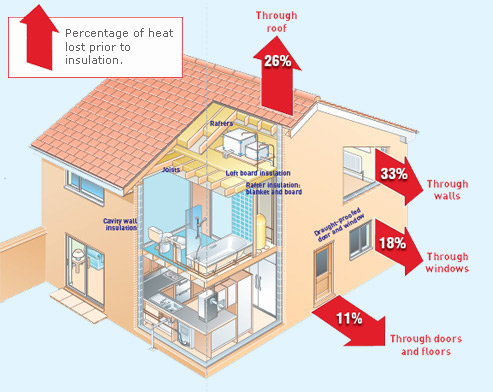
Pinpointing energy deficient areas in your home will help assure that you are not paying for unneeded services. A home energy audit can reveal a variety of things depending the style, make, year, and geographical location of your home. Some of the major sources of energy deficiencies are windows, attic insulation, lighting, HVAC Systems (Heating, Ventilating, and Air Conditioning), ductwork, and even your water heater.

* Windows - 20% of your home's total heat loss is attributed to deficient windows. Energy efficient windows help reduce the four types of heat loss (conduction, radiation, convection, and air leakage) because of their advanced technologies like low-E glass, quality frames, multiple paned glass, gas fills, and warm edge spacers. These technologies work together to lower the "U Value" which is the rate at which a home loses heat.

o Low-E coatings are used to reduce overall radiative heat flow.

o Quality Frames help to insulate the window and reduce heat transfer.

o Multiple panes work together to provide greater insulation. There are at least two panes of glass in an energy efficient window.

o Gas fills, which are generally argon or krypton, reduce the conductance between the two or more window panes.

o Warm Edge Spacers insulate the window, prevent condensation, and hold the glass panes the proper distance apart from one another.

* Attic Insulation - The greatest amount of energy loss occurs in the attic. Many attics are already insulated, but they were done so improperly or using improper insulation. Knowing the right type of insulation and how much of it you need is dependent upon your geographical location. Your local energy savings expert can help to give you an idea on what options are best for your home.

* Lighting - In many homes lighting accounts for 15% of the total electric bill. CFLs (Compact Fluorescent Lights) are 75% more efficient than incandescent lights. In addition, they will give you ten more years of life than a traditional incandescent light.

* HVAC System - Nearly half of your energy bill will be spent on home heating and cooling costs. A home energy audit can help you discover what size HVAC system will be right for your house as a system that is too big/too small will be very inefficient and will ware faster.

* Ductwork - Up to 40% of your furnace/air conditioner's energy use is wasted by a leaky duct system. A leaky duct won't be able to carry all of the air that your furnace/air conditioner is producing to the rest of your home. This will not only reduce comfort, but also take your furnace/air conditioner longer to heat your home which results in higher energy costs. A leaky duct has a tendency to take "dirty air" from your crawlspace, basement, or attic and circulate it throughout your house.

* Water Heater - Installing a tankless water heater can reduce the cost of heating water by 45%. A traditional tank-type water heater will continuously heat the water in your tank regardless if you use it or not, meaning you are paying to heat something that you may or may not use.

Instead of storing water in a tank, a tankless water heater heats water en route to its destination. The heating mechanism will only turn when you turn on your dishwasher, operate a washing machine, or open a hot water tap.

Recap

Home energy audits aren't scary like the tax audits. These are designed to save you money by identifying the precise locations in your home that need to be upgraded with energy efficient appliances.

Many people are satisfied with their energy bills, but their bills could be so much less after conducting a home energy audit. Home energy audits will definitively reveal what areas of your house are costing you the most money on your energy bills.

Source: http://www.artipot.com/articles/863972/a-home-energy-audit-is-a-good-thing.htm

Sunday, 21 December 2014

Learn 8 Easy Steps to Reduce Your Home Energy Bill And These Will Not Cost You a Dime

Before you think about adding renewable energy sources to your home, it may be a good idea to cut down on your home energy usage first. That sounds logical as not doing so is like leaving the windows open while the A/C is running! Maybe that is a stretch but I think you get the point. If you are thinking of adding solar or wind energy to your home, cutting down on your energy usage will only reduce your renewable energy investment.
Change Your Daily Habits: Sometimes the most difficult things to change lie between our two ears. Most of us probably did not arrive overnight at the bad habit of leaving the lights on while no one was in the room, or even worse...not even home. Yet, changing our daily habits can make a significant impact on home energy usage. And the best part, they do not cost us a dime.
1. Reduce Light Use - One of the easiest ways to cut energy costs is to live by the rule: one light on per person in the house. If that is a stretch for your family, challenge them by turning off unused lights until you get down to one light per person. Make a game out it and give a reward to the person who uses the least amount of lights. Sometimes, taking baby steps is the best way to go. And those small changes year-over-year will begin to add big dollars to your bank account.
2. Keep Unused Rooms Closed - There is no need to cool or heat rooms that are not in use such as the attic, basement or laundry room. Close doors and vents in unused rooms to keep the comfortable temperatures where your family is...and at a lower energy cost.
3. Close Garage Door - All day and night the house is either heating or cooling the garage so think twice before sending this stored energy to the wind...keep it! The garage is a form of insulation, and a good idea to keep in mind since heating and cooling costs can count for up to 25% of your energy bill.
4. Close Up Unused Fireplaces - since hot air rises, this is a more important rule in the wintertime. Opened fireplaces will create a natural vent for your hard earned heating dollars to escape.
5. Adjust Thermostat - adjusting the thermostat by 15 degrees for eight hours can reduce your electric bill by 15%. 15 degrees seem a bit extreme...try 5 degrees for a week then progress from there. And with programmable thermostats today that allow you to set your daily and weekly programs, this can make lowering your energy bill a simple chore.
6. Window and Blinds - although this may not have been high on your energy conservation list, opening or closing your windows, blinds or even curtains can have a positive effect on your energy bill. Instead of reaching for the A/C thermostat, try opening windows instead to vent hot air in the summertime, especially the upstairs windows if you have upper floors. Even using a fan near windows to blow hot air outside can be a lower energy usage choice than the A/C. If the A/C or heater is a must, closing the blinds and curtains can be a great way to help insulate your home from the weather. An exception to this rule is if your windows face the sun in the wintertime. In this case, open the blinds and curtains to let the solar energy in.
7. Bundle up or go naked - this one was probably not on your list, at least not on any energy conservation one. Instead of turning on the heater, throw on a sweater instead. And in no time, you will save enough money to buy a new sweater. For those hot summer days, go light on the cotton. How light is up to you, but keep the neighbors in mind if you leave the blinds and curtains open.
8. Cook Outside - instead of using the stove and heating the house, try cooking outside with your barbeque during the summer months. That way the stove, or secondary heater, will not be competing with your home cooling system.
With energy costs on the rise and renewable energy sources requiring an investment in time and money, changing your energy consumption habits to cut your energy bill is the best first step for most. And why not, it does not cost you a thing!
Keith Garrett is a solar energy and wind power enthusiast for the home. His website at [http://www.solarwind4homes.com] offers knowledge and tips to the home owner on transitioning to renewable energy in the 21st century.

Source: http://ezinearticles.com/?Learn-8-Easy-Steps-to-Reduce-Your-Home-Energy-Bill-And-These-Will-Not-Cost-You-a-Dime&id=4051342

Sunday, 7 December 2014

Benefits of a Home Energy Audit

With the right home energy auditor, there are many benefits of getting a home energy audit. Complete home energy audits can save your money on home energy bills, increase your homes comfort, improve your homes resale value and marketability, help you to take advantage of government incentive, and help the environment.

Save money on your home energy bills

If your home's energy bills are through the roof, then a home energy audit would be a major benefit for you. Your energy bills can be affected by many things. From small spaces around your windows and doors that aren't keeping in your conditioned air, to a large water heater that is using more energy than it needs to. A complete home energy audit will pinpoint the exact ways you can lower your home energy bills.

Not only will a home energy audit identify where you can save money, it will also prioritize the issues so you know which changes would make the most difference for you.

Increase your home's comfort

A key problem that many home energy auditors find in homes is air sealing. When a home energy auditor identifies air sealing as a problem, and fixes the problem, you will literally feel the difference in your home. The changes in your home will be night-and-day, there will no longer be cold drafts in the winter or hot bursts in the summer which will not only make you feel more comfortable, it will also save you money.

Improve your homes resale value and marketability

Another benefit of a comprehensive home energy audit is that it will increase the resale value and marketability of your home. According to a study published in the Appraisal Journal, every $1 decrease in annual energy costs increases the market value of a home by $20. So, you are not only saving money annually, but also making sure that you make money when it comes time to sell your home.

Homeowners that implement suggestions from a home energy audit also increase the perspective buyers' chance of buying their home. Home buyers will be pleased to hear that you have made changes to decrease energy bills and keep the house more comfortable.

Take advantage of government incentives

Recently the government has offered incentives to make energy efficient changes to your home. By receiving a home energy audit you are eligible to take advantage of the government's rebates and tax incentives.

Help the environment

Lastly, a complete home energy audit helps the environment. When you implement the improvements recommended by energy experts you use less energy, therefore reducing the amount of greenhouse gasses and pollution created. When your home isn't expelling as much energy to heat or cool it, to run appliances, or to light your home, you're saving money and helping the environment. 
 
Source: http://www.artipot.com/articles/1113228/benefits-of-a-home-energy-audit.htm

Sunday, 28 September 2014

Revamp Your Home With Marvelous Renovation Styles

Home improvement, remodeling are some of the many terms used for renovations done in home. Building stylish and high end homes have become a trend and spurted the growth of several home furnishing brands. Making additions to one’s home without the knowledge of interior decoration or designing is not a very good idea. Thus, several designers have now emerged to provide solutions to people who wish to have a classy home. Currently this industry is a booming sector and is poised to grow further in the coming years as the preferences of people gets more refined. 

What is Home renovation all about?
Home renovation process usually involves altering the structure or construction of existing home that covers lawns, garages, gardens and other outdoor structures. The renovation for improvement projects might also involve electrical work, maintenance and other general servicing tasks. The primary goal of all the above activities is to increase the comfort, create space if required and revamp the entire look. It might also include ensuring safety and saving energy to reduce utility costs. Home improvements can be done by hiring of general contractors, specialized contractors or you can do it yourself with DIY home improvement kits.

Home Renovation Industry
Since homeowners have grown more conscious about improving the appearance of their home, home improvement industry has undergone a huge revolution. Several designing firms are now bringing fresh home renovation ideas to the table. Some companies have also gone online to dive into this new emerging market. Several professional associations offer services to homeowners in the form of experienced architects, home decorators and also educate them about the varied trade guidelines. These days there are thousands of magazines, TV channels and consultancy firms who offer varied ideas for home renovation.

Current Trends of Home Renovation
Home renovation ideas can be categorized for kitchen, bathroom and rooms. Kitchen happens to be the heart of a home and you should carefully choose slip-resistant surface materials such as granite and laminate that last for years. A kitchen should have bright lighting, should be placed such that places like the island and the cook top are well lit for safety. Opt for stylish cabinets out of veneer or wood with glossy finish where you can hide away the containers& utensils.

Create color contrasts with cabinetry and wall paint it’ll prove to be a visual treat. Pullout wardrobes and wall ovens are great additions. Bathroom remodeling is pretty easy with a few tricks and tips. For bathrooms you have to play it cool with bright colors on the walls or floor tiles. Experiment with textures and patterns on curtain fabrics. Incorporate stylish metallic fixtures that match your bathtub. Use large mirrors that reflect a lot of light. Outdated floors can be covered up under a new bath mat. Living rooms and bedrooms can be tastefully designed with various themes such as cottage look, traditional, vintage and contemporary. Utilizing every nook and cranny is the best trick. Hang chandeliers in living rooms to draw attention to the ceiling. A small fireplace can be decorated with showpieces and artworks. Seating arrangements for small rooms can be limited to few chairs and a coffee table. Large living rooms can have three seated sofas and wing chairs. Upholsteries and window treatments should match your furniture style and wall paint to create a uniform effect.

Source: http://goarticles.com/article/Revamp-Your-Home-With-Marvelous-Renovation-Styles/8266612/

Sunday, 21 September 2014

home energy savers

They can be accessible even in remote counties. An additional vitality conserving candle bulb is the bulb that you use in your lampshades. It can make your rooms in the house have that spacious feeling. And they look and feel romantic way too specifically if you set in the colors pink and red. Hmm...now that's what you name a red mild special. Of program, some communities the following in the US are subsequent Germany's illustration of a residence photo voltaic vitality procedure. In Denmark, there is a prototype coal-fired strength plant which no for a longer period emits ash to the air but quite underground. Ideally, this can be emanated here in the United States and in China, which has the most amount of coal-pushed electrical power crops in the world.

But that's previously on a maximal scale. Let's have some more examples of electricity-preserving devices in the house. It's mainly because naturally, your electric power charges will reduced if you preserve vitality in your possess home. Really don't you like it?

With winter season coming up, quite a few men and women are acquiring that their property electrical power invoice is skyrocketing as the temperature drops. And in this time of economic crisis, it can be difficult acquiring the income to fork out people heating charges. Happily, there are many strategies to reduced your electric bill. Are you adhering to all these home power saver strategies?

  • Install CFL fluorescent bulbs in all your mild fixtures. This is one particular of the easiest and surest tactics to help save income. Despite the fact that the bulbs are extra highly-priced than normal incandescents, they very last a lot lengthier and conserve funds just about every month on your electrical bill. And they are now accessible in warmer colours, so you you should not have to contend with the white. glaring light of times previous.

  • Unplug electrical products you aren't making use of. Despite the fact that it can be a ache, you should normally unplug goods you aren't using, mainly because they typically draw ability even although they may perhaps be turned off. For illustration, if you certainly not use the clock on your microwave, that is electrical power currently being invested to continue to keep it on for no excellent reason.

  • Clean out or change your AC/heater filter when a month. It's important to preserve individuals filters clean - a dirty filter indicates the unit has to get the job done more difficult - that's significantly less successful.

  • Seal leaks exactly where drafts can arrive in. Use caulk to seal leaks about door and window frames. Set a 'draft stopper' at the base of doorways - even a rolled up towel will do. If your windows are outdated and drafty, think about large curtains to insulate them.

  • Lower your thermostat at evening. It's been revealed that individuals rest additional easily when they are slightly cooler, so decrease the temperature at night time - decreasing it by ten degrees quickly adds up in savings. As a make a difference of point - think about holding your thermostat set a little reduced in the day time as well - and use a sweater close to the residence.


On-line sources that have been created by the United States Energy Department, dwelling energy savers aim to aid the two shoppers as properly as the industry experts in analyzing different facets of use of residence energies.

Source: http://goarticles.com/article/home-energy-savers/4972770/

Sunday, 10 August 2014

Low Cost and No Cost Tips to Try Out!

Energy Efficient Improvements not only make your home more comfortable, but also will improve your Home Energy Ratings yielding long term financial benefits. Reduced energy bills will more than compensate for any capital investment in new energy systems or energy rated appliances. The reduced power consumption will also reduce green house gas emission, a major concern these days. Not only that, these will also will help fetch a higher price for your house when one day you want to sell it! But before you take the critical decision to invest in a new home energy system, there are a few simple things that will bring about almost immediate benefits to your coffers without any major alterations to your existing set ups. These tips need little or no new investment!


* Invest in a new programmable thermostat to keep your house cozy and comfortable in the colder seasons. When you are sleeping or in the house turn the temperature setting back 5 0 C to 10 0 C for eight hours which will save about 10 % of your energy bills. Bear in mind that every half degree Celsius of your thermostat lowered will lower your heating bill by 1% or so! (In the case of summer cooling you raise your thermostat temperature setting to bring about the same benefits).
* Almost every one is aware of the benefits of using CFL s for lighting. Regrettably all CFLs are not made equal. The main thing to look for is the energy labeling according to EU, ISI or equivalent standards. This is because there are so many products in the market today which when compared on apple to apple basis will show different energy efficiencies even when all the rest seems to be satisfactory.
* When connecting Electronic Items such as your TV, sound set up or the DVD always take the power connections off a Power Strip with on-off switches. Knock off this switch when you are not using a particular appliance. These appliances burn a few watts even when they are in standby mode!
* Switch off your computer and the monitor when not in use. Optimizing the brightness levels will reduce monitor power consumption. An average computer and a monitor power usage may amount to over 100 watts.
* To preserve the best hygiene levels you do not have to have a bath. Taking short hot water showers will bring down home energy consumption and suffice the purpose too.
* Set your home water heater's thermostat (what ever the type and fuel is) to about 49 0 C.
* When using your washing machine using a full load every time will save energy and money. Use cold water wherever possible and when the stain removal does not require it.
* Air Dry dishes instead of using the programmed drying cycle when using your dish washer. Some of you may not know this. Your dishwasher is one of the main electricity guzzlers in your home. Here the major portion of consumed energy is used for heating the water.
o Always wash full loads of dishes.
o Set the hot water temperature to a lower setting barely sufficient for the purpose.
o Avoid using hot water unless your dishes are, for example greasy.
* Ensure all your electrical appliances including fridges comply with EU Energy Labeling A plus (and also preferably with EU Eco- label though not essential).Interestingly the price of an A plus appliance is no more costly than a lesser rated unit.
* Use your windows and curtains wisely. In colder climes the South oriented windows bring in the warmth of the sun in the day time. Have the windows open during the day and closed and covered in the night to keep away the chill. During the winter have heavy insulating curtains on your windows for use during the night and overcast skies. Deciduous trees which do not cover the sun during the winter while providing shade in the summer is a good energy saving idea too.

Article Source: http://EzineArticles.com/2122785

Sunday, 29 June 2014

Home Energy Efficiency Tips: The Kitchen

Alternative home energy has been on the roll ever since people have made designs efficient enough to make them feasible. People may think that alternative energy is just a recent development, but in fact, alternative home energy has been around even before electricity was discovered.

Consider these types of alternative home energy:

1) Wind energy - Nowadays, windmills are used in homes to run small generators. These generators produce and store electricity to be used in running small home appliances. However, windmills have been around for a long time. If you take a look at the word "windmill" you will realize that this type of alternative home energy device was used for a purpose other than producing electricity.

Yes, the windmill was indeed, used to mill grain. As you may well know, grinding grain my hand is very hard work. So in order to make life more convenient and the production of flour more efficient, windmills were used to turn the large grinders.

Seeing as how this was so effective, it was inevitable that the windmill evolve into the 21st century in order to be used as a power source.

2) Solar energy - Many people think of this type of alternative home energy as something that's technologically advanced. In a sense, harnessing the power of the sun to produce electricity is. But this alternative home energy has already been in use for a long, long time. Think about this word for a second: clothesline. Aha, you get it now, don't you? Yes, we have been using solar energy to dry our clothes for God knows how long. Think about that spin dryer or hair dryer you have and think about how much electricity it uses to do a task that the sun has been able to do for years, albeit at a slower pace.

This alternative home energy is harnessed nowadays for a variety of tasks. Some use it to heat their homes, others use solar power to heat water, and other people use solar cells to power small appliances and save a little on that electricity bill. The efficiency by which we are now able to convert solar power into electricity is of such a degree that it is very possible to power a whole house! Now, isn't that amazing?


SOurce: http://www.youtube.com/watch?v=QYQbZ_A94vk

Sunday, 27 April 2014

An Introduction to Home Energy Systems

The words home energy systems are usually associated with solar energy. This is because the most popular residential energy system is the conversion of solar energy for electricity or water heating. There are two main types of solar energy, light and thermal. Light energy, from the sun, is harnessed by a collecting medium then transformed into electricity. Thermal energy, which is derived from the heat of the sun, is used to directly warm household water and swimming pools.


A typical home energy system has four components:

1. Solar Cells - Photovoltaic or solar cells made of a semiconductor material in which sunlight is converted into electricity through excitation of electrons. These cells require protection from various environmental and mechanical elements; thus, they are encased in photovoltaic modules or panels. These modules come in different sizes, weights, and shapes.

2. Inverter - An inverter transforms direct current into alternative current electricity.

3. Mounting System - A sturdy mounting system is imperative to secure your home energy systems atop a variety of surfaces from tiled roofs to the shiny exterior of a yacht.

4. Energy Storage - Batteries are optional as they served as storage for electricity produced.

The commonly used semiconductor materials in the manufacture of solar cells are:

1. Silicon - Mono-crystalline silicon is made by the use of a crystal microtome that thinly slices the material into 150 - 350 microns thickness.

2. Multi-Crystalline - Multi-crystalline silicon is made by sawing into a block of silicon.

3. An Amorphous Silicon - Amorphous silicon is produced when a thin layer of the material is placed on a substrate to make a photovoltaic module.

4. The flimsiest material used in solar cells, this film has a width of 1/10 micron.

The advantages of home energy systems are definitely extensive. Among such perks are the following:

1. There is relatively fast turnabout of capital investment now considering that solar power companies offer a minimum of a 20-year warranty and solar units can last a lifetime with proper use and care.

2. Since you are making your own electricity, you are no longer influenced by price hikes of electrical providers. You now have full reigns on the amount of electricity you can generate with your home energy system.

3. You don't have to pay for taxes. There are no taxes yet levied by the government when you harness solar radiation. You are entitled to as much sunlight as your system can get.

4. Home energy systems have low maintenance costs compared to electrical connections with their many wirings and cables.

5. It is encouraged by the government. Many governments actually offer incentives for people to switch to home energy systems as part of their environmentalist movement.

6. It is environment-friendly. Unlike renewable energy, solar power does not emit polluting emissions and harmful greenhouse gases such as carbon and methane. Accidental dredging and spillage seen in fossil fuel production is also not possible with solar power.

7. There are no dangerous ecological by-products made during solar power production.

8. Using home energy helps the environment. You set a good example for your neighbors to hopefully emulate. When you use solar power energy, you actually help conserve other depleting natural energy sources like petroleum and coal for future generation use. 
 
Source: http://www.artipot.com/articles/279967/an-introduction-to-home-energy-systems.htm