Home Energy

Showing posts with label audit for home energy. Show all posts

Sunday, 18 January 2015

Save Home Energy Information - What to Do to Save Energy

The effect of the constant increase in electricity bills leads people to find ways to save energy. For some, turning the lights off before sleeping is one way of minimizing electric consumption. While there are also some who minimize their use of electrical appliances in order to reduce their energy consumption. These methods are also good, but, they are not really that effective or do not really maximize energy saving. There are many ways to save energy and minimize your electricity bills even without having to sacrifice comfort. To give you a better idea, here's a few save home energy information that you might want to consider.
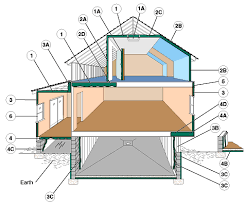
Although turning off the lights can save you energy, it doesn't stop the lights from consuming energy as well as it also leads to you living in a dark place. This problem can be solved by changing all incandescent bulbs and using compact fluorescent lamp (CFL) bulbs instead. Aside from being energy efficient, CFL bulbs also produce brighter light as compared with what incandescent bulbs can produce. Doing this method can help you save energy without having to sacrifice comfort. The minimal use of electrical appliances and turning them off after using is also a good idea. But, to maximize your energy saving process, unplug them after turning them off because they still continue to consume energy when left unplugged. Also, try to buy energy efficient appliances. There many of these appliances these days that is being manufactured and sold in the market. They may be quite expensive, but in the long run, they can really help you save a lot of energy as well as lessen your electricity expenses.
Water leaks and water consumption are also one of the things that you can learn when reading about save home energy information. As you know, water and energy are related to each other. One of the largest sources of energy around the world comes from hydro power plants. This means that if there is a shortage in water, there may also be a shortage in energy. With this theory, there's a need for us to also conserve water in order to save energy. This is one of the most common things being overlooked by people when it comes to saving energy. Often, they would think that saving energy is just all about saving electricity consumption. This situation only shows the lack of knowledge when it comes to save home energy information.
With thorough research, you can surely find a lot of save home energy information that you can apply in order to save energy and lessen your electric expenses. What were mentioned previously are just a few save home energy information that you might want to keep in mind and try to apply. To learn more about save home energy information, try searching the internet. For sure, you will be able to find a lot out there.

Article Source: http://EzineArticles.com/4432475

Sunday, 9 November 2014

Performing a Quick and Easy Home Energy Audit

In recent years most of us have been plagued with rising energy bills. In many cases energy bills have risen to such an extent that they are causing financial hardship. Our dependence on fossil fuels, which are non renewable, will cause energy prices to rise even further in the future. There are many simple common sense actions that can be taken to reduce energy costs and consumption. These can range from replacing the incandescent bulbs with energy efficient fluorescent bulbs to simply turning down the thermostat. Heating and cooling costs account for the greater part of most energy bills. Most new homes are built to be energy efficient but many older homes have not been upgraded for energy efficiency. Many older homes are drafty and lack sufficient insulation. For older homes auditing your homes energy is a must. There are many companies that do these audits but they can be pricey. A home energy audit can be done easily and can be the first step in identifying problem areas that are costing energy and money.

A home energy audit will help to determine the efficiency of your home's heating and cooling systems. It will also reveal how to reduce waste and conserve those valuable energy dollars. The first step in any home energy audit is to determine where energy is escaping unused. Reducing drafts in a typical home can result in energy savings of 5% to 30%.

Checking for drafts is relatively easy. Checking windows, baseboards, electrical sockets, fireplace dampers, doors, and other obvious places will probably reveal several places where simple repairs will solve the problem. Checking the exterior of the building is a very important of any home energy audit. Checking exterior corners, foundation areas, and places where chimneys and siding meet will often reveal gaps that can be easily caulked or repaired.

One of the most important parts of any home energy is checking for adequate insulation. Many older homes are woefully under insulated. Insulation has what is known as an 'R' value. Be sure to check for the recommended 'R' value for your area. Check in all the obvious places like the attic and walls. Look for gaps and make sure there is a vapor barrier. A well planned and thorough home energy audit will show where energy is being wasted. Develop your own annual home energy audit that fits your own needs. Then take the necessary actions and start saving money!

Article Source: http://EzineArticles.com/2862192

Sunday, 12 October 2014

The Best Way to Save Home Energy Revealed

Home renewable energy is a rapidly growing interest for many home owners. When it comes to household bills and expenses, nothing ever seems to get any cheaper. The cost of natural fuel sources is increasing at an alarming rate and, not surprisingly, our gas and fuel bills at home are also on a sharp increase. These reasons largely contribute to a rapidly growing interest in people looking for alternative and cost effective ways of how to save on home energy. There are a number of very simple and relatively straightforward ways to do this that a large proportion of home owners generally overlook. Here are just 3 of the most frequently asked questions when looking for alternate ways on saving on home energy:

1) Why Should I Consider Home Renewable Energy?
This question is one which you should come to terms with before any other. First and foremost, ultimately you want to save money on your electric bill. For reasons outlined above, this is the primary goal for your reasons for saving home energy. The other benefit is that you will be doing your little bit for the environment. By burning less energy at home, you are helping to reduce the amount of harmful toxins and emissions that conventional energy producing methods generate.
2) What's The Easiest Way For Me To Save On Home Energy?
There are many small and simple steps you can follow to help save home energy that many people overlook. These are things such as turning lights off when not needed, switching to low energy lights, keeping doors closed (particularly in colder months), not leaving electrical items on standby, buying energy efficient electrical items and turning your thermostat down a degree or two. However the biggest impact you can have is to generate your own free electricity by building your own solar panels or wind turbine.
3) How Much Will Home Renewable Energy Initially Cost Me?
Most of the tips above cost nothing to implement. All you need is a small degree of discipline. You're the one who's paying for your heating and gas bills so why waste it by leaving doors and windows open when it's cold outside - but you would be surprised how many people actually do!! They are simple steps which cost you nothing.
However, to make a real impact, a small but very prudent investment may be needed. The best home renewable energy products on the market today by far are solar panels and wind turbines.
These forms of home renewable energy are being recognized more and more with home owners across the world as a viable, cost effective means of saving home energy. It is quite possible to build your own solar panels to generate home electricity for under $200 and these will provide a long term, free, sustainable and clean energy supply for your home for years to come.
If you decide to generate your own Home Renewable Energy [http://www.homediyenergy.info], you will have a satisfying and rewarding experience provided you follow instructions which have been written by the professionals.
They should be well structured, clear and organized and you should have access to help if you should need it.

Article Source: http://EzineArticles.com/2701608

Sunday, 20 July 2014

The Future of Home Energy in America

You must be observing that it looks money crisis is much more important than the energy crisis in America. But people are not taking it seriously, because they don't know if economy slowly turning around, energy consumption will increase and oil prices will once again burst out faster and more people will at last prefer to use their own home energy sources.

On the other hand it is also the fact that the annual World Energy Outlook has already given their verdict that by 2030 oil prices will stabilize at around $125 a barrel. And the increase will also be because of rising costs for equipment that the oil producers will have to face.
We also find that different the most known brands are still earning more than others, but it is becoming evident that their hold over energy is slowly decreasing. Huge new oil fields in Russia and Saudi Arabia were recently brought into the mix and these oil-rich governments have begun tipping the scale in their favor away from old fashioned big oil. It is also seen that some countries are trying to renewal their contract with their dealer who are getting more profit from the consumption of oil. There is literally trillions of dollars needed to develop new oil fields and keep oil flowing throughout the world. But it is also observed that if this profit goes into government's hand, this government will prefer to get more hold on different resources.
Most dealers like Chevron are banking on developing alternative energy sources and looking more inclined to this very idea. It is also forecast that that only 3% of the world's emissions will come from the U.S. or might be from Europe till the end of 2030. And other remaining will be from China and Middle East. More about the Greenhouse gas, it will continue to rise until global habits change, and definitely it will take some 15 years and after that the crises will be the eve of a past.

Source: http://goarticles.com/article/The-Future-of-Home-Energy-in-America/2731460/

Sunday, 15 June 2014

How Brick Stone Can Make Your Home Energy Efficient

Brick Stone Home Energy Efficient
A home that's energy-efficient is actually healthier and more cost effective. Energy efficiency modifications in your home can eliminate or at least lessen the poor quality of air that's brought in by various weather conditions. One way to make your home energy efficient is to pay attention to the building materials and to the house design.

In Australia, bricks have long been recognized as commonly chosen building materials. In fact, nearly 90% of built houses are constructed using bricks. Because of the campaign to decrease energy consumption in its entire form, there are building regulations these days that require the newly built houses to be more energy efficient. There are some things you need to know in order to come up with an informed choice.
Think about the amount of energy that's usually consumed in your home. Maybe, you'll be surprised to find out that a large part of the home energy is used up in cooling and heating. Cooking and lighting, even when put together, comprise only a few percent. Hence, anything which can help lessen the cooling and heating bills of your home will be a good investment, right? But the question is, do you think it is possible to cut down cooling and heating energy consumption while keeping up a practical thermal comfort inside your home? It is in this case that passive design comes into play.
Passive design handles the energy coming from the sun to improve the house's cooling and heating in a natural way. There are actually four major principles in passive design. These are orientation, ventilation, insulation and thermal mass.
Orientation - The huge glass portion in the north part allows the low winter sun in. And to block the high summer sun, simple shading like eaves is applied.
Ventilation - When the crest of summer time has already passed, air is permitted to get in and go out of the house in order to make it cool in a natural manner. To optimize cross ventilation, either side of the building or the house has generous openings with almost negligible internal obstructions.
Insulation - The insulation in the wall and ceiling serves as the obstacle to heat transportation. Insulation efficiency can be calculated by means of its R-value but it doesn't present the whole issue. Various walls may have the same R-value but may not work the same.
Thermal Mass - Wall materials that are dense and heavy, like bricks, suck up heat and hamper its conveyance through the walls. Through these, temperature changes become moderate and the heat absorption during summer is significantly hampered. Compared to brick walls, the lightweight materials have very low thermal mass. And because of this thermal mass, brick walls turn out to be more capable of moderating home temperature even if they have similar R-values.
Now come to think of thermal mass and consider brick stone. The first two techniques in the passive design, which are orientation and ventilation, need to be set up into the house. And your home material preference has a major effect on the quantity of thermal mass in a house or a building. One of the simplest and most economical ways to put up thermal mass is through bricks. Those bricks that are made from clay contain very high thermal mass. They are available to make your home well ventilated, comfortable and more energy efficient.
There is a research proving the idea that Brick stone homes are energy efficient. The said research has revealed that a large part of the heat is bounced back to the outside environment via the brick's exterior panel. Another conclusion that came out is that in summertime, the temperature inside a home that's constructed from bricks remained favorable and comfortable in spite of the changing temperature outside.
The US Department of Energy stated that thermal mass stores up heat by means of converting its temperature. It can be achieved by storing heat coming from a warm room or by means or transforming direct solar radiation into heat. And since brick stone has more thermal mass than other building lightweight materials, it is a very useful element that can be used up in making your home more energy efficient.
To sum up, brick is a very simple and inexpensive technique in putting up thermal mass in your next home. Therefore a brick stone home is more energy efficient than those thatare made from other materials.

Article Source: http://EzineArticles.com/1759053

Sunday, 8 June 2014

Home Energy Audit - Why Your Home Needs and Energy Audit

Going about a home energy audit is one smart way of cutting the utility bills that you pay for at the end of every month. Many people tend to forget about the parts of their homes that might be causing the rise in the home energy consumption. One fact that you must learn to take note of is that the home appliances that you possess, although they are switched off and not in use, still consume energy because of the phantom loads that they create.

Examples of these are the VCRs, stereo components, microwave oven, toasters, and the stoves.
Although they are turned off, they still consume energy. How much more when you total their consumptions in a day and then for the entire month? Likewise, the remote controlled devices are always put on a ready mode. Such state of readiness also consumes home energy. Apart from these concerns, the parts of the home contribute to the escalating home energy consumptions. Among these are the attics, fireplaces, and the rest of the less obvious parts of the house.

The general purpose of the Home Energy Audit
Why is a home energy audit recommended by the experts? What is this process devoted for? For everyone's clear understanding, the ultimate purpose of the home energy audit is the making possible of the efficiency in the energy utilized in the home. When the home energy used is maximized and securely utilized, there will be the most possible reduction of the utility bills today and the succeeding years to come.
A home energy audit will work best for homeowners who are confronted with very large electric bills. In fact, conducting the needed home energy audit will let you save thousands of dollars in the upcoming years. Stop dwelling on the windows and doors you have at home for they are obvious spots that let you lose much home energy. Why not look into the less obvious spots like the attic, the ceilings, and the fireplace?
Most homeowners put away their unused things and keep them in the attic. Sure, the attic is a great place to store your junked stuffs. But then didn't you ever glance at your attic and consider the renovation of it so that there will be proper insulation in there? You may indeed throw out big bucks for its improvement but it will do your attic good, so to speak. The attic must be installed with open air vents so as to keep up a good air circulation. When there is no proper air circulation in the attic, the utmost tendency is for the roofing and the stored stuff in the attic to get destroyed.

Now take into consideration the ceiling you've got at home. It must have enough insulation so that the home energy will be kept from escaping from it and to go upwards to the attic. The easiest way for heat to transfer into the attic is through a hole in the ceiling.
Also take a good look at the fireplace. When the concern of regulating and controlling the temperature inside the home comes in, the fireplace is the most difficult spot to cover. As the design of the fireplace is concerned, it is particularly aimed at moving the smoke out of the interior environment of the home.
The process is known as the propulsion of the heat. But then the main problem is that whenever the fireplace is not in use, it still goes on with the propulsion of the heat towards the exterior borders of your home.
When dealing with a fireplace, you should bear in your mind that the flue must always be kept closed when it is not being used. But if you intend to have it open, simply turn off the heater inside your home since it will come out of the vents then cross the room, and then right into the fireplace the heat will be blown out. For some logical reasons, such situation will just cause you a nightmare in terms of the electrical bills that will confront you.

Article Source: http://EzineArticles.com/1753158