Home Energy

Showing posts with label Personalized Home Energy Conservation. Show all posts

Sunday, 4 January 2015

A Home Energy Audit Is A Good Thing

The concept of energy efficiency has become a trend in recent times, as it is geared towards saving you money and helping the environment. In order to upgrade to a whole-house energy efficient home, one should first schedule a home energy audit.

The use of the word "audit" is not your typical application of the word. A home energy "audit" is designed to save you money by pinpointing the exact areas in your home that are prone to be energy deficient. This is achieved by a team of professionals evaluating the inside of your home with advanced technologies like infrared cameras.

Benefits

Pinpointing energy deficient areas in your home will help assure that you are not paying for unneeded services. A home energy audit can reveal a variety of things depending the style, make, year, and geographical location of your home. Some of the major sources of energy deficiencies are windows, attic insulation, lighting, HVAC Systems (Heating, Ventilating, and Air Conditioning), ductwork, and even your water heater.

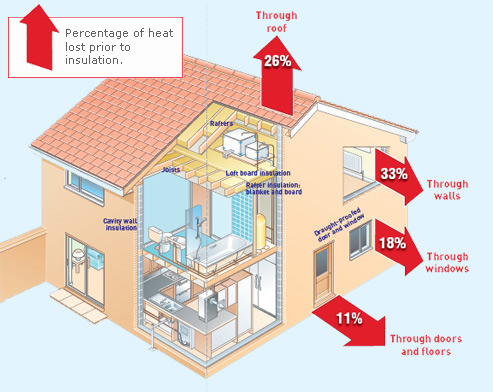
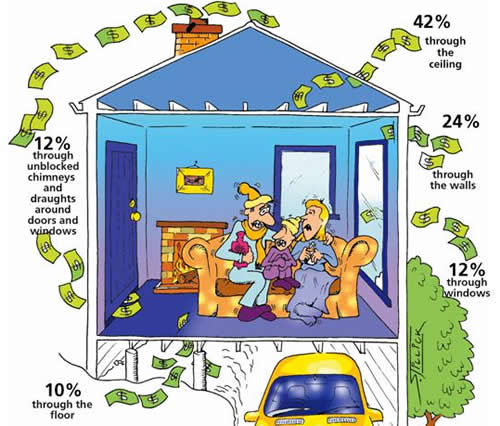
* Windows - 20% of your home's total heat loss is attributed to deficient windows. Energy efficient windows help reduce the four types of heat loss (conduction, radiation, convection, and air leakage) because of their advanced technologies like low-E glass, quality frames, multiple paned glass, gas fills, and warm edge spacers. These technologies work together to lower the "U Value" which is the rate at which a home loses heat.

o Low-E coatings are used to reduce overall radiative heat flow.

o Quality Frames help to insulate the window and reduce heat transfer.

o Multiple panes work together to provide greater insulation. There are at least two panes of glass in an energy efficient window.

o Gas fills, which are generally argon or krypton, reduce the conductance between the two or more window panes.

o Warm Edge Spacers insulate the window, prevent condensation, and hold the glass panes the proper distance apart from one another.

* Attic Insulation - The greatest amount of energy loss occurs in the attic. Many attics are already insulated, but they were done so improperly or using improper insulation. Knowing the right type of insulation and how much of it you need is dependent upon your geographical location. Your local energy savings expert can help to give you an idea on what options are best for your home.

* Lighting - In many homes lighting accounts for 15% of the total electric bill. CFLs (Compact Fluorescent Lights) are 75% more efficient than incandescent lights. In addition, they will give you ten more years of life than a traditional incandescent light.

* HVAC System - Nearly half of your energy bill will be spent on home heating and cooling costs. A home energy audit can help you discover what size HVAC system will be right for your house as a system that is too big/too small will be very inefficient and will ware faster.

* Ductwork - Up to 40% of your furnace/air conditioner's energy use is wasted by a leaky duct system. A leaky duct won't be able to carry all of the air that your furnace/air conditioner is producing to the rest of your home. This will not only reduce comfort, but also take your furnace/air conditioner longer to heat your home which results in higher energy costs. A leaky duct has a tendency to take "dirty air" from your crawlspace, basement, or attic and circulate it throughout your house.

* Water Heater - Installing a tankless water heater can reduce the cost of heating water by 45%. A traditional tank-type water heater will continuously heat the water in your tank regardless if you use it or not, meaning you are paying to heat something that you may or may not use.

Instead of storing water in a tank, a tankless water heater heats water en route to its destination. The heating mechanism will only turn when you turn on your dishwasher, operate a washing machine, or open a hot water tap.

Recap

Home energy audits aren't scary like the tax audits. These are designed to save you money by identifying the precise locations in your home that need to be upgraded with energy efficient appliances.

Many people are satisfied with their energy bills, but their bills could be so much less after conducting a home energy audit. Home energy audits will definitively reveal what areas of your house are costing you the most money on your energy bills.

Source: http://www.artipot.com/articles/863972/a-home-energy-audit-is-a-good-thing.htm

Sunday, 28 December 2014

What is a Home Energy Check Up and How Can it Help Me?

Are you aware that you might not be using your energy efficiently? A home energy check up analyzes your energy usage in order to give you a guide on how to use your energy efficiently; thus, saving you hundreds of dollars while maintaining comfort in your home. Using the same amount of energy yet getting the lowest cost is good for your budget, but there are numerous ways in which you can lower your energy consumption and save more money on your energy bill each month.

This reduction in energy consumption is also good for the environment: the less energy human beings use, the less energy is produced, and the less energy will be put to waste unconsciously or intentionally and there are many alarming bi-products have to be dealt with. We should not just be concerned on our personal finances but also on how to lower our energy bills; we need to think of better and effective ways to reduce our energy use as well. One way of knowing how we use our energy whether efficiently or inefficiently is to conduct a home energy check up. It can save the environment and it can save you hundreds of dollars by energy saving. The fact is that the number one biggest expense in your home is your power bill. And if you are located in an area with extreme weather climates chances are your energy bill is twice as the regular household's bill in areas with "normal" climate. For example, if you live in the desert or warm areas with very hot temperatures you are forced to turn your air conditioner's thermostat to its maximum level to cool your home, in doing so your cooling energy bills can be extraordinarily high especially during summer, or if you are in extremely cold areas, your winter heating bill will be high.
However, you have the power to reduce the cost of your energy bill by making some changes. Doing a home energy check up can guide you in deciding what needs to altered or maintained. There are many things you can do to have an energy efficient home. After conducting a home energy check up you may decide whether to switch to energy efficient exteriors, change your traditional lights to energy efficient bulbs, or schedule an energy saving hour.
Your attitude towards how you use your technology also affects your energy consumption. If you have kids and they tend to forget to switch off the television set after watching or if they are used to putting the computer to sleep mode instead of turning it off after using chances are you will still have bigger energy bill cost. Educate your children and other household members about energy saving and how wasting energy can harm the environment. Help them understand how to use the switch off button.
Little steps like this can make a big difference in your finances and to the environment. It is not enough to have a home energy check up; it is just the beginning of energy saving and is well worth your time and effort.

Article Source: http://EzineArticles.com/4408835

Sunday, 21 December 2014

Learn 8 Easy Steps to Reduce Your Home Energy Bill And These Will Not Cost You a Dime

Before you think about adding renewable energy sources to your home, it may be a good idea to cut down on your home energy usage first. That sounds logical as not doing so is like leaving the windows open while the A/C is running! Maybe that is a stretch but I think you get the point. If you are thinking of adding solar or wind energy to your home, cutting down on your energy usage will only reduce your renewable energy investment.
Change Your Daily Habits: Sometimes the most difficult things to change lie between our two ears. Most of us probably did not arrive overnight at the bad habit of leaving the lights on while no one was in the room, or even worse...not even home. Yet, changing our daily habits can make a significant impact on home energy usage. And the best part, they do not cost us a dime.
1. Reduce Light Use - One of the easiest ways to cut energy costs is to live by the rule: one light on per person in the house. If that is a stretch for your family, challenge them by turning off unused lights until you get down to one light per person. Make a game out it and give a reward to the person who uses the least amount of lights. Sometimes, taking baby steps is the best way to go. And those small changes year-over-year will begin to add big dollars to your bank account.
2. Keep Unused Rooms Closed - There is no need to cool or heat rooms that are not in use such as the attic, basement or laundry room. Close doors and vents in unused rooms to keep the comfortable temperatures where your family is...and at a lower energy cost.
3. Close Garage Door - All day and night the house is either heating or cooling the garage so think twice before sending this stored energy to the wind...keep it! The garage is a form of insulation, and a good idea to keep in mind since heating and cooling costs can count for up to 25% of your energy bill.
4. Close Up Unused Fireplaces - since hot air rises, this is a more important rule in the wintertime. Opened fireplaces will create a natural vent for your hard earned heating dollars to escape.
5. Adjust Thermostat - adjusting the thermostat by 15 degrees for eight hours can reduce your electric bill by 15%. 15 degrees seem a bit extreme...try 5 degrees for a week then progress from there. And with programmable thermostats today that allow you to set your daily and weekly programs, this can make lowering your energy bill a simple chore.
6. Window and Blinds - although this may not have been high on your energy conservation list, opening or closing your windows, blinds or even curtains can have a positive effect on your energy bill. Instead of reaching for the A/C thermostat, try opening windows instead to vent hot air in the summertime, especially the upstairs windows if you have upper floors. Even using a fan near windows to blow hot air outside can be a lower energy usage choice than the A/C. If the A/C or heater is a must, closing the blinds and curtains can be a great way to help insulate your home from the weather. An exception to this rule is if your windows face the sun in the wintertime. In this case, open the blinds and curtains to let the solar energy in.
7. Bundle up or go naked - this one was probably not on your list, at least not on any energy conservation one. Instead of turning on the heater, throw on a sweater instead. And in no time, you will save enough money to buy a new sweater. For those hot summer days, go light on the cotton. How light is up to you, but keep the neighbors in mind if you leave the blinds and curtains open.
8. Cook Outside - instead of using the stove and heating the house, try cooking outside with your barbeque during the summer months. That way the stove, or secondary heater, will not be competing with your home cooling system.
With energy costs on the rise and renewable energy sources requiring an investment in time and money, changing your energy consumption habits to cut your energy bill is the best first step for most. And why not, it does not cost you a thing!
Keith Garrett is a solar energy and wind power enthusiast for the home. His website at [http://www.solarwind4homes.com] offers knowledge and tips to the home owner on transitioning to renewable energy in the 21st century.

Source: http://ezinearticles.com/?Learn-8-Easy-Steps-to-Reduce-Your-Home-Energy-Bill-And-These-Will-Not-Cost-You-a-Dime&id=4051342

Sunday, 14 December 2014

Top 10 Ways To Save Money And Energy

There are many ways to save energy and money at home. These are some of the things that I've done.

• #1 I replaced my SUV with the plug-in hybrid Chevy Volt. This saves me several thousand dollars a year in gas since I mostly drive in electric mode. I save even more when gas prices rise.

• #2 I now use a pellet stove as the only means to heat my home. The pellet fuel and the electricity to run the stove cost about $1,000 per year. Pellet stoves aren't a solution but a great way to reduce your dependence on home heating oil sticker shock.

• #3 Insulating your home is one of the best things to do. In the attic, I double insulated my attic floor, put in an attic radiant barrier and an attic solar exhaust fan. I also put an insulating cap on top of the attic stairs. I also installed insulating curtains on all the windows and put window film on the actual glass.

• #4 If you heat your water using electricity, you have a few options. I first started saving by installing a simple gray box hot water heater timer. Setting the timer box to come on for a couple hours in the morning and in the evening was sufficient enough and it saved a lot of electricity.

• #5 I replaced the gray box timer and installed one of the first Energy Star Heat Pump Hot Water Heaters. The average person will save over $300 per year with one. In simple terms, the heat pump takes the heat that's already in the air and puts it in the water tank. This is much more efficient than powering a heating element in the tank all the time.

• #6 I grow my own organic food for part of the year. For part of the year, I don't have to buy basil, lettuce, tomatoes, zucchini, potatoes, blueberries or strawberries. Once you establish your initial garden structure you'll save money as the years go by.

• #7 You can save $10-$30 per month on natural gas or electricity just by hanging your laundry. You can go even further by getting a centrifuge laundry spinner that squeezes out an extra quart of water before you actually hang the clothes. This three minute laundry spinner will cut the drying time in half whether you hang the laundry or still use a dryer.

• #8 I killed most of the phantom or vampire electrical loads in the house by using properly sized power strips. You'd be surprised how much it costs to power a cable box, a microwave clock, a TV or even a garage door opener when it's not in use. If a power strip is too much of a hassle, they make remote controlled ones now.

• #9 Using less water saves in a few different ways. I use basic adjustable low flow shower heads, dual flush toilets and sink aerators. Less water used means less waste water and less energy needed to heat it.

• #10 I use fans instead of air conditioning unless there's a heat wave. You'd be surprised how cold you get when sleeping with a fan blowing on you. If you have to use AC, experiment by setting it a few degrees higher and using a fan.


Source: http://www.youtube.com/watch?v=5SqPOeaYMUw

Sunday, 30 November 2014

Aspects of a Full Home Energy Audit

Many homeowners are looking for ways to make their home more energy efficient and save money on their utility bills. Often times the energy company that performs a free home energy audit only checks obvious areas like lighting and air sealing.

It is important that your home energy auditor performs a complete home energy audit. Vital aspects of your home that should be checked in a home energy audit include:

*Heating and cooling system: Learning about the energy efficiency of your heating and cooling system is essential. If this is not checked there could be an abundant amount of energy being lost that you do not even recognize. Heating and cooling accounts for a large amount of energy use in your home and can be a major source of energy loss as well. Getting a complete home energy audit that assesses your heating and cooling system is something that you don't want to go without.

* Sealing: Although air sealing throughout your home is an obvious check, make sure it fully evaluates the air sealing. Simply checking around windows is not enough for your energy audit. A proper one should check for air leakage in your attic, foundation, and around any vents that may be letting in unwanted air.

When places are found throughout your home that are not sealed properly, it should suggest fixes such as insulation in the attic or basement, caulk and weatherstripping around doors and windows, and foam gaskets behind outlet and switch plates on walls. These fixes will keep in the conditioned air so that you are not wasting energy heating or cooling the outside, unconditioned air.

* Insulation: They are only complete when the insulation in your home is fully assessed. Many homeowners believe they have enough insulation in their home when this may actually be a major cause of energy loss. Simply checking to see if there is enough insulation is not a complete energy audit either though. Assessing your insulation r-value is essential.

The r-value of your insulation determines how well your home is insulated. This value depends on the type insulation that is in your home. A full one will assess this and let you know if you need to improve the insulation in your home to save energy and money.

* Lighting: Lighting is a simple fix, but is not always addressed in a free home energy audit. A proper one should be extensive and definitely address the lighting in your home. With new lighting technologies, the energy you use for lighting could be reduced by 50-75%. Installing energy efficient compact fluorescent light bulbs (CFLs) throughout your home will save energy and money every month.

* Appliances: It should also include an assessment of the appliances you already have and the way that you are using them. Dishwashers, refrigerators, washing machines, and dryers all must be checked out to achieve a proper understanding of the energy you are already using. When that is established, your home energy auditor should then be able to give you solutions to save money when it comes to your home's appliances.

All in all, it is extremely important that you receive a whole-house energy audit to discover your home's energy efficiency and ways that you can save money. If it looks appealing, make sure that the auditor addresses all aspects of your home and fully assesses every area where you could possibly be losing energy.

Source: http://www.artipot.com/articles/1112441/aspects-of-a-full-home-energy-audit.htm

Sunday, 16 November 2014

How to Make Your Home Energy Efficient and Get OFF THE GRID!

Tips to Make Your Home Energy Efficient
With the financial situation that the world is facing these days many people are trying to find a way to save, save, save. By making your home energy efficient it will save you money in the long run. Your monthly electricity and gas bill will be decreased if you make your home energy efficient. Insulation is a key to maintain the comfort of your house inside. If you have the right insulation put into your home you will see your power bills drop. There are places in your home that should be insulated that you may not have thought of such as floors, ceilings, basement walls, overhangs, and the walls inside. Wherever air is leaking into your home it is making your power bill increase. So you need to be sure that all cracks and crevices are sealed tight. You can help make your home energy efficient by replacing your lighting fixtures with energy efficient models. You should make use of your dimmer switches also because this saves energy and money. Open up your blinds and curtains and let the natural light shine in this is how you can save the most on your bill and it is the best way to conserve energy.
When you are using your home appliances you are using a lot of energy. The best way to save energy here is to shop for new appliances that have the energy star. The cost of these products may be higher then normal but they are worth the extra money in the long run.

Also - TV's use a hell of a lot of energy so why not turn them off during an evening and go out and enjoy yourself - take your family out, experience the great out doors! Sounds cheesy I know but it works! Install some solar panels - this will make your home energy efficient. Energy is created with these using natural resources. Solar panels can come in the form of a solar thermal collectors that help the suns energy heat water. What a great way to use the suns natural energy and to make your home energy efficient. Install a wind turbine or build your own wind farm in your back garden! Wind Mills can produce a lot of what is essentially - FREE - energy from a renewable source that is the wind!

The best way to make your home completely energy efficient is to get off the grid by making your own own energy producing devices. Build your own Wind Turbines, Solar Panels and convert your home to Green Power. Not only is it cheaper to build your own rather than buy them but it is also very rewarding! Once you've built your own windmills and solar panels you could be producing more energy than you can consume so in which case you could start selling your "Homemade Energy" back to the grid! This will offset the initial price of building your own wind turbines and solar panels and give you some extra cash to spend on cooler things! Green Power Easy is a Brand New DIY Green Energy Course with Step By Step Videos which teaches you how to:

Build Your Own Solar Panels
Build Your Own Wind Turbine
Completely Convert Your Home to Green Energy
Live off the grid with the "Free" alternative energy you produce
Start your own green-power business.
Save Our Planet and Your Money!

Article Source: http://EzineArticles.com/3082954

Sunday, 19 October 2014

Top Reasons for a Home Energy Assessment

As energy conservation becomes more and more of a priority for homeowners, many people are opting to receive home energy assessments--also frequently called home energy audits. There are steps you can take to assess the level of energy consumption in your home and identify opportunities to reduce it. However, a professional energy auditor may be able to more closely hone in on the problems and target the areas where energy saving is most possible.   Whether you take the DIY route or hire an expert, a home energy assessment is important for several reasons--here are five of them:

1. Save money! Many people take the energy efficient route because they believe it will save them money, and in the long run, they're absolutely right. Installing a programmable thermostat that switches into conservation mode when you're not at home; getting better insulation in your attic; putting in new, energy-smart windows…all of these actions will, in time, save you money.

2. Earn money! Another reason many people receive home energy audits is because it makes them eligible for rebates of some kind. Whether from a governmental rebate program, your power company or the manufacturer of an Energy Star appliance you recently purchased, rebates from anywhere are appreciated and a great way to cushion the cost of making energy-saving upgrades.

3. Enhance your level of comfort. If you have drafty windows or doors, you know they can be uncomfortable in colder months. Livable attic and basement space is often difficult to equally heat or cool alongside the rest of the home. Keeping your home more consistently comfortable, and doing so in a manner that doesn't waste energy and money, is one of the greatest benefits that comes from making changes based on a home energy assessment.

4. Professional home energy assessments vary depending on who performs them, but comprehensive audits will include things such as carbon monoxide testing; checking of the ducts; inspection for mold or moisture in the home; and the inspection of the home's ventilation. If problems are found, they are not only energy inefficient, they can also be dangerous to you and your family. Potential safety threats found in a home energy audit should be dealt with immediately.

5. If you're planning to rent, sell or make improvements to your home, a home energy assessment is a wonderful idea. If you have dated appliances, a hot water heater or an HVAC system that will likely need replacing regardless, do so with an energy efficient model. For whatever reason you're planning to make upgrades, it is most sensible to do so with energy efficiency in mind.

While home energy assessments may seem superfluous, they offer a valid, solid foundation on which you can make an action plan for saving money, improving the comfort of your home and ultimately making your property safer and more valuable. You don't necessarily have to spend thousands of dollars and months of time making all the energy efficient improvements you need simultaneously. But, as a homeowner, it is wise to know where the problems and challenges lay and have a course of action in place to resolve them.

Source: http://www.artipot.com/articles/1317394/top-reasons-for-a-home-energy-assessment.htm

Sunday, 28 September 2014

Revamp Your Home With Marvelous Renovation Styles

Home improvement, remodeling are some of the many terms used for renovations done in home. Building stylish and high end homes have become a trend and spurted the growth of several home furnishing brands. Making additions to one’s home without the knowledge of interior decoration or designing is not a very good idea. Thus, several designers have now emerged to provide solutions to people who wish to have a classy home. Currently this industry is a booming sector and is poised to grow further in the coming years as the preferences of people gets more refined. 

What is Home renovation all about?
Home renovation process usually involves altering the structure or construction of existing home that covers lawns, garages, gardens and other outdoor structures. The renovation for improvement projects might also involve electrical work, maintenance and other general servicing tasks. The primary goal of all the above activities is to increase the comfort, create space if required and revamp the entire look. It might also include ensuring safety and saving energy to reduce utility costs. Home improvements can be done by hiring of general contractors, specialized contractors or you can do it yourself with DIY home improvement kits.

Home Renovation Industry
Since homeowners have grown more conscious about improving the appearance of their home, home improvement industry has undergone a huge revolution. Several designing firms are now bringing fresh home renovation ideas to the table. Some companies have also gone online to dive into this new emerging market. Several professional associations offer services to homeowners in the form of experienced architects, home decorators and also educate them about the varied trade guidelines. These days there are thousands of magazines, TV channels and consultancy firms who offer varied ideas for home renovation.

Current Trends of Home Renovation
Home renovation ideas can be categorized for kitchen, bathroom and rooms. Kitchen happens to be the heart of a home and you should carefully choose slip-resistant surface materials such as granite and laminate that last for years. A kitchen should have bright lighting, should be placed such that places like the island and the cook top are well lit for safety. Opt for stylish cabinets out of veneer or wood with glossy finish where you can hide away the containers& utensils.

Create color contrasts with cabinetry and wall paint it’ll prove to be a visual treat. Pullout wardrobes and wall ovens are great additions. Bathroom remodeling is pretty easy with a few tricks and tips. For bathrooms you have to play it cool with bright colors on the walls or floor tiles. Experiment with textures and patterns on curtain fabrics. Incorporate stylish metallic fixtures that match your bathtub. Use large mirrors that reflect a lot of light. Outdated floors can be covered up under a new bath mat. Living rooms and bedrooms can be tastefully designed with various themes such as cottage look, traditional, vintage and contemporary. Utilizing every nook and cranny is the best trick. Hang chandeliers in living rooms to draw attention to the ceiling. A small fireplace can be decorated with showpieces and artworks. Seating arrangements for small rooms can be limited to few chairs and a coffee table. Large living rooms can have three seated sofas and wing chairs. Upholsteries and window treatments should match your furniture style and wall paint to create a uniform effect.

Source: http://goarticles.com/article/Revamp-Your-Home-With-Marvelous-Renovation-Styles/8266612/

Sunday, 24 August 2014

What Can Home Energy Audits Do for Homeowners?

Many property owners decide to hire an auditor to perform a home energy audit. There are many good reasons to have an audit done on your home. Despite their growing popularity, many homeowners still dismiss the potential of home energy audits. Believe it or not, there are a number of benefits to having a home energy audit performed on your home, and they aren't all focused on the environment.

Does Your Family's Green Living Measure Up?
The environment isn't the only reason to have a home energy audit performed, but it is one of the biggest reasons homeowners do it. The home energy audit will help your family determine where they can improve to live greener and cleaner. The addition of an Energy Star certified product, for example, can help lower your household's overall consumption. A home energy audit can also provide information on things that can be changed or added to your home to reduce waste and stay eco-friendly.

Lower Utilities Bills Can Help You Enjoy the Other Side of Green Living
There is another side of green living that your family can benefit from. This green is the color of money rather than Mother Nature. A home energy audit can show you which utilities you may be over-consuming. It might not be due to actual use, but rather another issue. For example, a home energy audit could advise you of an appliance that needs replaced, such as an old electricity-devouring A/C unit or hot water heater. The auditor can provide suggestions for energy efficient replacements. The home energy audit results can help you find ways to live comfortably while keeping more green in your bank account.

Move Away From the Grid
A home energy audit can also help you come up with ways to live more independently and less dependently on the "grid". In this case, we are talking about more than just electricity, although that is a good place to start. Some families have solar panels installed so they can supplement their current power source or possibly wean themselves off of it completely. Wind power is another popular choice, depending on where you live. Home energy audits are the first step to improving the way your family lives.

Do Your Homework Prior to the Home Energy Audit
Before hiring a company to perform your home energy audit, do a little research. You do not have to turn into an expert, after all that is why you are hiring a professional. However it can help to know what a home energy audit will include. Most services offer clear information on what is covered and areas where your home might need improvement. For example, most home energy audits will include vital household components such as the furnace, hot water heater and air conditioning and insulation.

The home energy audit focuses on more than just energy consumption. It can also assist you with information on your home's indoor air quality and overall comfort.

Get Funding for Your Home Energy Audit
Many people are not aware that they can actually receive funding for their home energy audit from the government. The amount and eligibility requirements will vary from one location to another, however in Ontario homeowners can receive up to $5000 in grant money for improvements they make to their home that improve its energy efficiency. Learning about available grant money should be your second step prior to hiring a company to perform an energy audit on your home.

You could wind up saving much more than you spent on the home energy audit inspection in the long term. Follow the suggestions and instructions of the auditor and you will begin to notice a decrease in utility bills. The home energy audit can also give your home more appealing qualities to entice buyers should you decide to sell in the future.

Source: http://www.artipot.com/articles/1360953/what-can-home-energy-audits-do-for-homeowners.htm

Sunday, 3 August 2014

How to Create a Personalized Home Energy Conservation System

Notice I didn't say "how to install" an energy conservation system. To create an energy conservation system that's going to reduce your home's energy consumption requires a combination of conservation and efficiency, or choices and technology.
Here's how you create a home energy conservation plan that will help you reduce your home's electric bill.
Think about like this:
·        Conservation results from conscious choices over time.
·        Efficiency utilizes technology.

Start With Conservation
Conservation is not deprivation or lack.
Simply put, conservation is being aware of how much energy your home uses and making behavioral changes in your energy habits. Conservation takes into account the final end sum of the energy it takes to maintain your home's minimal comfort level.
The minimum comfort level of your home cannot be measured against another home. Factors vary with each home's location, family size, and family lifestyle.
If you live in Maine, your greatest energy expense may be heating your home; if you live in south Texas, your greatest expense may be cooling your home. A family of two (2) whose members work away from home five (5) days per week need less energy than a family of four (4) who work from home.
Think about. Look at the ways your home uses energy. Heating, cooling, heating water, cooking and storing food, lights, laundry, and electronic equipment.

Here are five (5) actions to begin reducing your overall energy use?
·        adjust your heating system thermostat down in winter,
·        turn your cooling system thermostat up in summer
·        take short showers instead of long baths
·        wash laundry in cold water
·        turn lights of when leaving a room

Now Add Efficiency
Efficiency is the use of technology to maximize our conscious conservation choices.
Here's how to apply technology to the conservation choices listed above.
·        Install a digital, programmable thermostat compatible with your heating and cooling system. Program the thermostat for the temperature settings that work for you during the day, at night, and while family members are away from home.
·        Reduce your water heater thermostat to 120 degrees (rather than the manufacturer's setting of 140 degrees)
·        Install a timer on your electric water heater. Set it to automatically come on during the hours your family actually uses hot water for showers and laundry. Set it to automatically turn off when no one is home to use it.
·        Switch to compact fluorescent light bulbs (CFLs) when you replace your standard incandescent bulbs.
Making conscious decisions to reduce your home's energy consumption coupled with the technology compatible with your choices, creates a personalized energy-reducing plan for your home. In a sense, you put your energy conservation on automatic pilot.

Article Source: http://EzineArticles.com/2041596

Sunday, 27 April 2014

An Introduction to Home Energy Systems

The words home energy systems are usually associated with solar energy. This is because the most popular residential energy system is the conversion of solar energy for electricity or water heating. There are two main types of solar energy, light and thermal. Light energy, from the sun, is harnessed by a collecting medium then transformed into electricity. Thermal energy, which is derived from the heat of the sun, is used to directly warm household water and swimming pools.


A typical home energy system has four components:

1. Solar Cells - Photovoltaic or solar cells made of a semiconductor material in which sunlight is converted into electricity through excitation of electrons. These cells require protection from various environmental and mechanical elements; thus, they are encased in photovoltaic modules or panels. These modules come in different sizes, weights, and shapes.

2. Inverter - An inverter transforms direct current into alternative current electricity.

3. Mounting System - A sturdy mounting system is imperative to secure your home energy systems atop a variety of surfaces from tiled roofs to the shiny exterior of a yacht.

4. Energy Storage - Batteries are optional as they served as storage for electricity produced.

The commonly used semiconductor materials in the manufacture of solar cells are:

1. Silicon - Mono-crystalline silicon is made by the use of a crystal microtome that thinly slices the material into 150 - 350 microns thickness.

2. Multi-Crystalline - Multi-crystalline silicon is made by sawing into a block of silicon.

3. An Amorphous Silicon - Amorphous silicon is produced when a thin layer of the material is placed on a substrate to make a photovoltaic module.

4. The flimsiest material used in solar cells, this film has a width of 1/10 micron.

The advantages of home energy systems are definitely extensive. Among such perks are the following:

1. There is relatively fast turnabout of capital investment now considering that solar power companies offer a minimum of a 20-year warranty and solar units can last a lifetime with proper use and care.

2. Since you are making your own electricity, you are no longer influenced by price hikes of electrical providers. You now have full reigns on the amount of electricity you can generate with your home energy system.

3. You don't have to pay for taxes. There are no taxes yet levied by the government when you harness solar radiation. You are entitled to as much sunlight as your system can get.

4. Home energy systems have low maintenance costs compared to electrical connections with their many wirings and cables.

5. It is encouraged by the government. Many governments actually offer incentives for people to switch to home energy systems as part of their environmentalist movement.

6. It is environment-friendly. Unlike renewable energy, solar power does not emit polluting emissions and harmful greenhouse gases such as carbon and methane. Accidental dredging and spillage seen in fossil fuel production is also not possible with solar power.

7. There are no dangerous ecological by-products made during solar power production.

8. Using home energy helps the environment. You set a good example for your neighbors to hopefully emulate. When you use solar power energy, you actually help conserve other depleting natural energy sources like petroleum and coal for future generation use. 
 
Source: http://www.artipot.com/articles/279967/an-introduction-to-home-energy-systems.htm